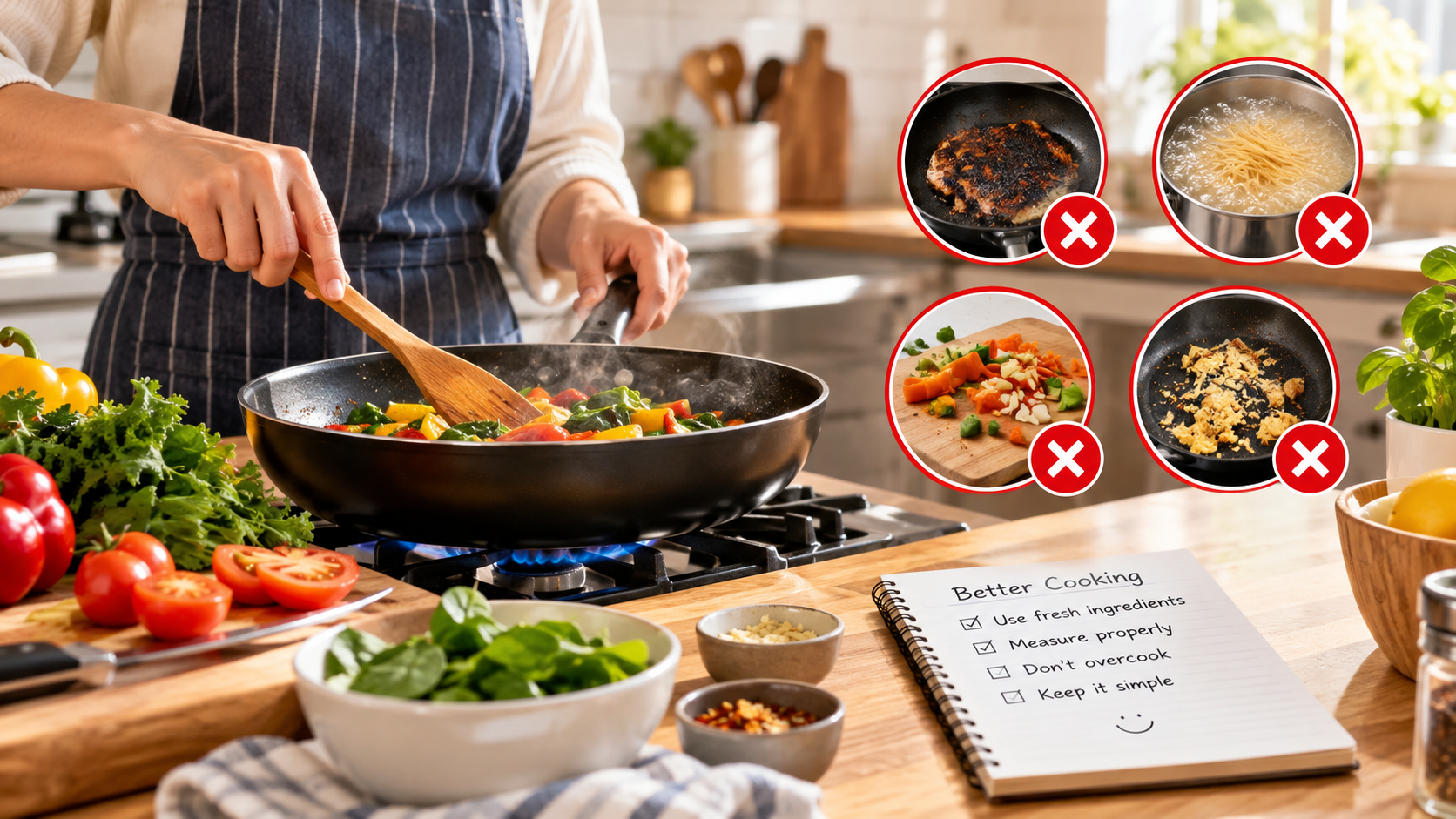
Everyday cooking does not have to be complicated, but a few small habits can make a surprisingly big difference to the final meal. Beginners often assume that a disappointing dish means they chose the wrong recipe or lack natural cooking ability. In reality, many common problems come from simple issues such as overcrowding a pan, using excessive heat, seasoning too late, or failing to prepare ingredients before cooking begins.
The good news is that these mistakes are easy to recognize once you know what to look for. Learning to avoid them will not only improve the taste and texture of your food; it will also make cooking calmer, more predictable, and much easier to enjoy.
You do not need to master every cooking technique at once. Avoiding a handful of recurring mistakes can improve your results immediately while you continue building experience.
1. Starting Without Reading the Whole Recipe
One of the most preventable mistakes is beginning a recipe after reading only the first few instructions. You may discover halfway through that an ingredient needed to be thawed, the oven should have been preheated, or a sauce requires more time than expected.
Make a habit of reading the complete recipe before touching the stove. Pay particular attention to preparation times, cooking temperatures, resting periods, and steps that need to happen simultaneously.
A few minutes of preparation can prevent a great deal of scrambling later. This is especially important when cooking for guests or preparing dinner after a busy day.
2. Using a Dull Knife
A dull knife may seem safer because it feels less sharp, but it often requires more force and makes cutting less controlled. When a blade struggles to move through an onion or tomato, it can slip unexpectedly.
Keep your main kitchen knife reasonably sharp and learn basic cutting technique. A stable cutting board is equally important. If the board moves across the counter, place a slightly damp kitchen towel underneath it.
Use steady movements rather than forcing the blade through food.
Similar-sized pieces generally cook more evenly.
Keep the board stable and avoid rushing through unfamiliar cuts.
3. Putting Cold Food Into an Overcrowded Pan
A crowded pan is a common reason vegetables, meat, and other ingredients fail to brown properly. When too much food is added at once, moisture accumulates. Instead of developing a good seared surface, the ingredients can begin steaming in their own liquid.
Give ingredients enough room to make contact with the hot cooking surface. If necessary, cook in batches rather than trying to fit everything into one pan.
This does not mean every dish requires an empty-looking skillet. The important point is to leave enough space for moisture to escape and for the food to make proper contact with the pan.
4. Cooking With Heat That Is Too High
High heat feels efficient because food cooks quickly, but faster is not always better. Beginners often turn the burner up when they want to speed up dinner and then discover that the outside of the food has burned while the center remains undercooked.
Learn to adjust the heat during cooking. A pan does not have to remain at one temperature from start to finish. You may begin with moderate heat for browning and lower it afterward to finish the cooking more gently.
5. Adding Salt Without Tasting
Under-seasoned food can taste flat, but adding salt repeatedly without tasting can create the opposite problem. Some ingredients also bring their own saltiness, particularly prepared stocks, cheeses, sauces, cured foods, and packaged ingredients.
Season thoughtfully and taste when it is safe to do so. For dishes that cook for a long time, remember that liquid can evaporate and concentrate the seasoning.
Also remember that salt is not the only way to improve flavor. Depending on the dish, herbs, spices, garlic, citrus juice, vinegar, or another suitable acidic ingredient may provide the missing balance.
6. Ignoring the Importance of Preheating
Some cooking methods depend heavily on starting with the right temperature. A cold oven can affect baked goods, while a pan that has not heated sufficiently may prevent ingredients from browning as intended.
Follow the recipe’s preheating instructions when they matter. At the same time, avoid treating every pan as if it needs to become extremely hot. Different cookware and ingredients require different approaches.
With experience, you will begin to recognize the signs of a properly heated pan without relying entirely on guesswork.
7. Moving Food Around Too Much
Beginners sometimes become nervous when food sits in a pan and keep stirring, flipping, or moving it. While some foods require frequent attention, others need uninterrupted contact with the cooking surface to develop color.
Consider what the recipe is trying to achieve. If you are sautéing delicate vegetables, regular movement may be appropriate. If you are trying to brown a piece of meat or develop a crust on a potato, constant movement can work against you.
Learning when to leave food alone is a surprisingly valuable cooking skill.
8. Cutting Into Meat Immediately
Another common mistake is slicing cooked meat the moment it leaves the pan or oven. Depending on the cut and cooking method, allowing it to rest can help retain more of its juices when it is eventually sliced.
The exact resting time depends on what you are cooking and how large it is. Rather than following a rigid rule for every piece of meat, consider the size and preparation method and use a food thermometer when appropriate for checking doneness and food safety.
A better habit
Think of cooking and serving as two separate stages. Give food the appropriate time to finish, settle, or rest instead of assuming that removing it from the heat means the process is immediately complete.
9. Measuring Everything—or Nothing—Incorrectly
Measurement matters differently depending on what you are making. Baking generally requires greater precision because ratios of flour, liquid, fat, sugar, and leavening agents influence the structure of the finished product.
In everyday savory cooking, there is often more flexibility. A stew can usually accommodate a little more of a vegetable, while a cake recipe may not tolerate major changes to its proportions.
Beginners should therefore learn when precision matters most. Follow baking measurements carefully, while gradually developing judgment for flexible dishes such as soups, stir-fries, roasted vegetables, and sauces.
10. Neglecting Food Safety
Flavor should never come at the expense of safe food handling. Raw meat, poultry, seafood, and eggs require particular care, and ready-to-eat foods should be kept separate from raw ingredients that may carry harmful bacteria.
- Wash hands before preparing food and after handling raw animal products.
- Keep raw and ready-to-eat ingredients separated.
- Clean preparation surfaces and utensils appropriately.
- Refrigerate perishable foods promptly.
- Use a food thermometer when internal temperature is important for safety.
Food safety is not an advanced skill. It belongs in the foundation of everyday home cooking from the very beginning.
11. Trying to Cook Too Many Things at Once
Multitasking can make a kitchen feel productive, but beginners often take on more simultaneous tasks than they can realistically manage. The result may be burnt onions, forgotten pasta, or a sauce that thickens too far while attention is elsewhere.
Start by identifying the steps that genuinely require attention. Tasks that can wait—such as chopping garnish or setting the table—should not compete with food that is actively cooking.
As your timing improves, you can gradually combine tasks. Good kitchen organization is less about doing everything simultaneously and more about knowing what deserves attention first.
12. Treating the Recipe as an Unchangeable Set of Rules
Recipes are useful guides, but ingredients vary. A tomato may contain more water than another tomato. One oven may run hotter than another. A thick piece of chicken will not cook exactly like a thin one.
Use the recipe as a framework while paying attention to the food itself. If a sauce is reducing faster than expected, adjust accordingly. If vegetables are still firm, continue cooking rather than removing them simply because the timer has sounded.
This does not mean ignoring instructions. It means learning how to combine written guidance with observation.
A Simple Mistake-Proofing Checklist
Turn Mistakes Into Useful Cooking Lessons
The most important thing to remember is that mistakes are part of learning. Instead of judging a meal simply as good or bad, ask what caused the result.
Was the heat too high? Did the pan contain too much food? Was the seasoning added too early? Did the ingredients need more preparation? Was the recipe more ambitious than your current skill level?
Answering those questions gives you something useful to carry into the next meal. Over time, the same problems happen less frequently because you begin recognizing them before they become serious.
The Kitchen Gets Easier With Awareness
Most beginner cooking mistakes are not mysterious. They come from rushing, poor preparation, excessive heat, inadequate seasoning, overcrowding, or failing to pay attention to what is happening in the pan.
Once you start noticing these patterns, everyday meals become far more predictable. You do not need to cook perfectly; you simply need to observe, adjust, and learn from each attempt. That steady process is what turns basic home cooking into a dependable skill.