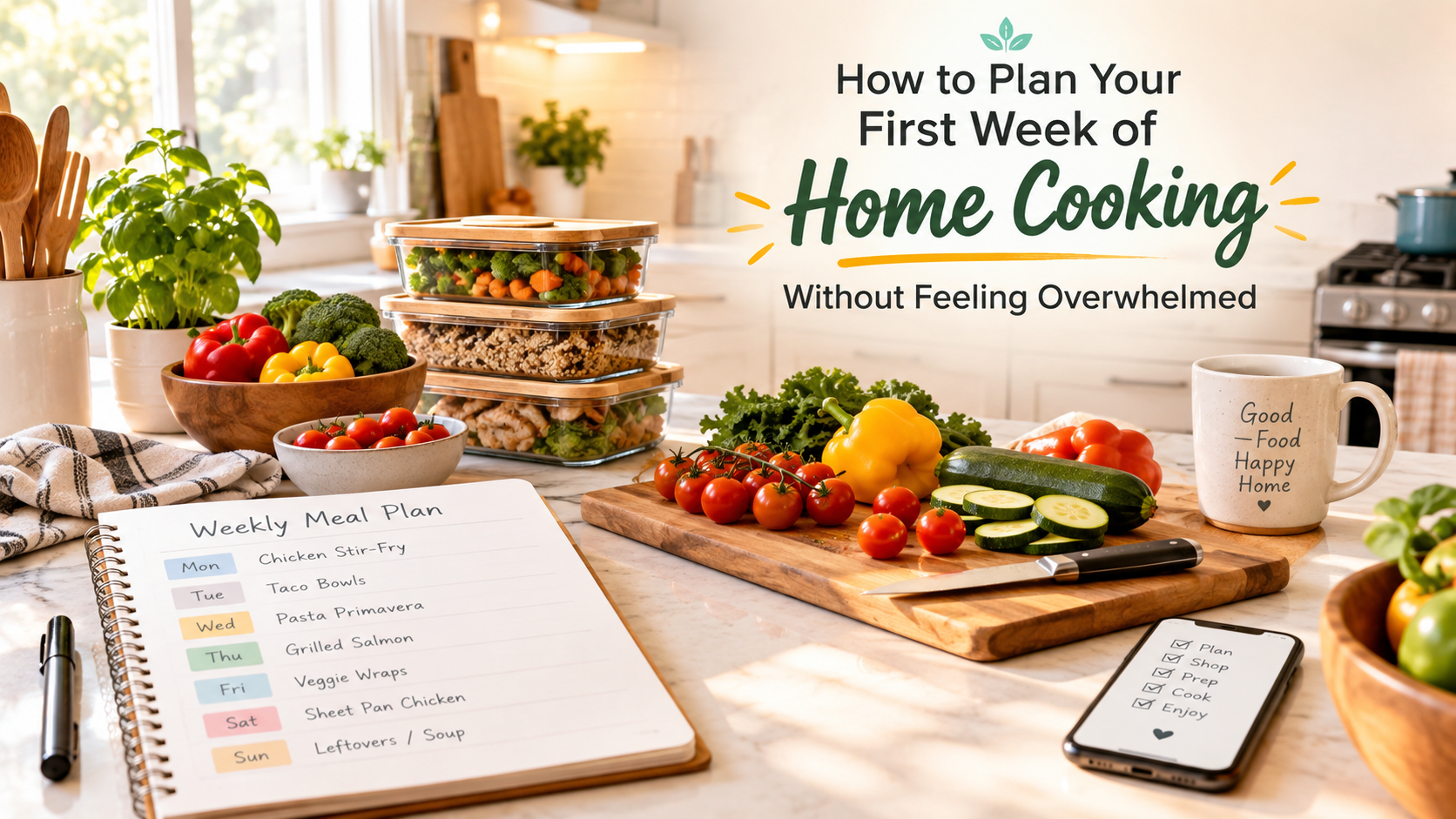
Planning your first week of home cooking can sound more complicated than it really is. Seven days of breakfasts, lunches, dinners, shopping, preparation, and cleanup can quickly feel like a lot—especially if you are still learning your way around the kitchen. The solution is not to create a perfect meal plan. It is to build a simple system that gives you enough structure without making every meal another decision.
The smartest first week is deliberately modest. Choose familiar ingredients, repeat useful components, leave room for leftovers, and give yourself at least a couple of easy meals. Once you understand that home cooking does not require a brand-new recipe every day, planning becomes considerably easier.
The goal of your first week
Do not aim to cook seven impressive dinners. Aim to establish a comfortable rhythm: shop once, prepare a few basics, cook simple meals, use leftovers intelligently, and finish the week knowing what works for you.
Begin With Three Simple Decisions
Before choosing recipes, decide how much cooking you can realistically handle. Your schedule matters more than an ambitious meal plan. Someone working from home may have time for a slow-cooked dinner, while someone returning home late may need a meal that takes fifteen minutes.
Time
Decide which days allow 30–45 minutes and which need something much quicker.
Energy
Do not schedule demanding recipes for the evenings when you are usually exhausted.
Appetite
Choose meals you genuinely enjoy rather than planning dishes simply because they look impressive.
Use a Mix of Easy, Moderate, and Flexible Meals
A common beginner mistake is assigning a complicated recipe to every day. That creates unnecessary pressure and leaves no room for unexpected changes.
A better approach is to divide the week into different levels of effort. For example, one day might feature a simple pasta dish, another could be roasted chicken and vegetables, and another might use leftovers in wraps or bowls. A quick egg-based dinner can serve as a backup when your schedule changes.
Plan about three proper cooking sessions, two leftover or combination meals, and two very easy meals. The exact number is flexible, but the principle is important: not every meal needs to be a cooking project.
Build Your Shopping List Around Ingredients, Not Just Recipes
Buying completely different ingredients for seven unrelated recipes is one of the fastest ways to make home cooking expensive and complicated. You may end up with half-used vegetables, several sauces, and specialty ingredients sitting untouched in the refrigerator.
Instead, choose ingredients that can appear in multiple meals. A bunch of spinach, for instance, might work in eggs, pasta, sandwiches, or a grain bowl. Roasted vegetables can accompany a main dish one evening and become part of lunch the next day.
A useful first-week shopping foundation
- Proteins: eggs, beans, lentils, chicken, fish, tofu, or another preferred option.
- Vegetables: choose several versatile fresh or frozen options.
- Carbohydrates: rice, pasta, potatoes, oats, bread, tortillas, or similar staples.
- Flavor builders: onions, garlic, herbs, spices, lemon, vinegar, or suitable sauces.
- Convenience ingredients: frozen vegetables, canned beans, or prepared stock can make busy days easier.
There is nothing wrong with using convenient ingredients. A sensible meal plan should fit your real life rather than an imaginary version of it.
Your First Seven Days Can Be Much Simpler Than You Think
The following framework is not a rigid menu. It demonstrates how to arrange effort throughout the week while leaving room for personal preferences.
Prepare Only the Things That Actually Save Time
Meal preparation can be helpful, but beginners sometimes turn it into another source of stress. You do not need to spend an entire Sunday preparing seven complete meals in containers.
Instead, look for small tasks that make future cooking easier. Wash vegetables, chop an onion or two, cook a batch of rice, hard-cook some eggs, or portion ingredients that will be used within the next few days.
Do not prepare more fresh food than you can safely store and reasonably eat. Food quality declines with time, and food safety should always take priority over convenience.
The 20-minute preparation rule
For your first week, try limiting advance preparation to a short session. If you can make the next two or three meals easier without spending hours cooking ahead, you are already gaining most of the benefit.
Create a Backup Meal for Difficult Days
Even the best meal plan can meet a busy day. Work runs late, plans change, or you simply do not feel like cooking. Without a backup, you may abandon the entire plan and order food because the alternative feels too difficult.
Keep two or three extremely simple options available. Frozen vegetables with eggs, canned beans with rice, pasta with a quick sauce, soup with toast, or a basic sandwich can provide a practical safety net.
The backup meal does not need to be exciting. Its job is to keep one difficult evening from turning into an abandoned week of cooking.
Make Lunch Easier by Cooking With Tomorrow in Mind
One of the most useful habits for a beginner is cooking slightly more food when the ingredients are suitable for leftovers. A dinner portion can become tomorrow’s lunch without requiring another full cooking session.
For example, roasted vegetables can be added to a grain bowl, cooked chicken can become a wrap, and extra rice can become the foundation for a quick stir-fry. Think about the second use before you cook, but avoid forcing every leftover into a completely different recipe.
Keep Your Recipes in One Place
Constantly searching for recipes while trying to cook can create unnecessary mental clutter. During your first week, choose a small collection of reliable recipes and save them somewhere convenient.
Keep notes about adjustments you make. If you discover that a particular dish tastes better with less salt, more vegetables, or a shorter cooking time on your stove, write that down. Your personal notes will eventually become more useful than generic recipe instructions because they reflect your own kitchen.
Avoid These First-Week Planning Traps
Seven days does not require seven complicated recipes.
Specialty ingredients can add cost and waste before you know whether you enjoy the dish.
A plan should guide your week, not punish you when your schedule changes.
Preparing excessive amounts of food can create waste and make cooking feel like a chore.
Use a Simple Planning Sheet
You can make your first weekly plan with nothing more than a piece of paper. Divide the week into meals and mark each one as cook, leftover, or easy. Then build your shopping list around those choices.
| Planning question | What to decide |
|---|---|
| Which meals will I cook? | Choose three or four manageable cooking sessions. |
| Which meals can use leftovers? | Identify foods that can safely carry into another meal. |
| What is my backup? | Keep at least one very quick option available. |
| What ingredients overlap? | Choose ingredients that can work in multiple meals. |
Give Yourself Permission to Adjust the Plan
A meal plan should make life easier, not create guilt. If you planned roasted vegetables on Tuesday but have no energy to cook them, moving the meal to Wednesday is not a failure. If you enjoy one dinner enough to repeat it, repeat it.
After your first week, look at what actually happened rather than what you intended to happen. Which meals were easy? Which ingredients went unused? Which recipes produced useful leftovers? Which nights were hardest?
Those answers give you the information needed to build a better second week.
Your First Week Is Practice, Not a Performance
Successful home cooking does not begin with an elaborate seven-day menu. It begins with a manageable plan that respects your time, energy, budget, and current skill level.
Keep the first week simple. Cook a few reliable meals, reuse ingredients intelligently, leave space for leftovers, and maintain an easy backup option. By the end of the week, you will have learned something more valuable than a list of recipes: you will understand how much cooking actually fits into your life. From there, expanding your menu becomes a natural next step rather than an overwhelming challenge.