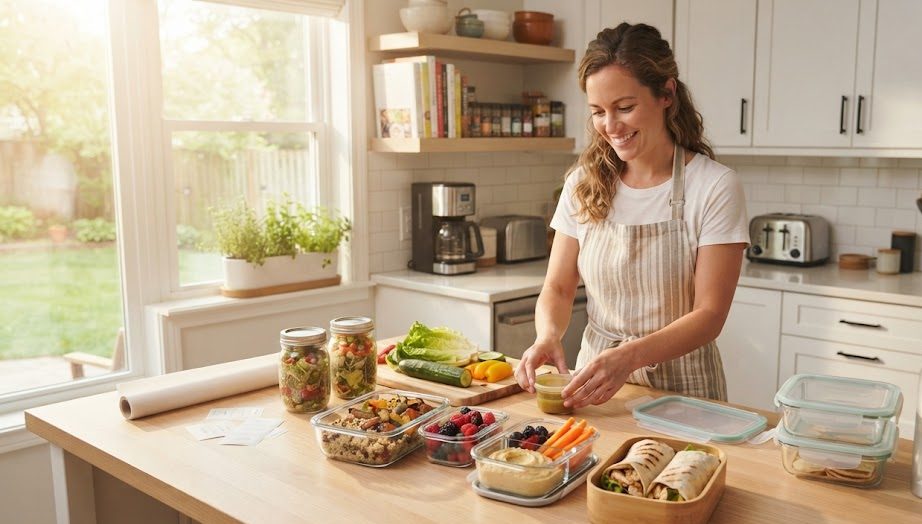
Make Lunch One Less Thing to Think About
Morning routines can become stressful when lunch preparation is left until the last few minutes. A few practical habits can move most of the work to a calmer part of the day, leaving your morning focused on getting out the door rather than searching for ingredients and assembling a meal.
Preparing lunch in the morning may sound manageable when you have plenty of time. But once an alarm is delayed, a meeting starts early, or someone needs your attention, even a simple sandwich can suddenly feel like another deadline.
The solution does not have to be elaborate meal preparation. Often, the biggest improvement comes from deciding what lunch will be ahead of time and completing a few small tasks before the morning begins.
Decide Tomorrow’s Lunch the Night Before
The first source of morning stress is often decision-making. If you wait until breakfast to decide what you want for lunch, you may spend several minutes opening cabinets, checking the refrigerator, and changing your mind.
Instead, choose your lunch while cleaning up after dinner or before beginning your evening routine. It can be as simple as deciding between leftovers, a sandwich, a wrap, or a prepared bowl.
The evening decision
Ask yourself: What is the easiest lunch I can realistically prepare for tomorrow? Choosing convenience on a busy night is often better than planning something ambitious that creates morning pressure.
Create a Small Lunch Preparation Station
If lunch ingredients are scattered throughout the kitchen, preparation takes longer than necessary. Create a simple area where lunch-related items can be gathered before the morning.
This might be one refrigerator shelf, a pantry basket, or a designated section of the counter. Keep suitable containers, wraps, lunch bags, or other frequently used supplies nearby if that arrangement works for your kitchen.
Keep prepared ingredients together.
Have suitable lunch containers easy to reach.
Keep useful packing items in one predictable location.
Prepare Ingredients Instead of Complete Meals
One of the easiest ways to reduce morning work is to prepare individual components in advance. This gives you flexibility while still removing most of the preparation effort.
For example, suitable vegetables can be washed and prepared ahead, grains can be cooked in advance, and other lunch ingredients can be portioned so they are ready to combine.
This method works particularly well when you do not want to eat the exact same lunch every day.
The ideal morning lunch routine is often one where the main ingredients are already prepared and you only need to combine, pack, and go.
Use Dinner Leftovers Strategically
Leftovers can eliminate much of the work involved in making lunch. When dinner is finished, immediately think about whether a suitable portion can become tomorrow’s meal.
Set aside the lunch portion appropriately and store it safely. This prevents the food from getting mixed into the general refrigerator contents and forgotten.
You can also prepare a little extra of a versatile ingredient during dinner and use it differently for lunch. For example, suitable cooked vegetables or grains can become part of a bowl, wrap, or salad the following day.
Keep Three Reliable Lunch Options
You do not need a different lunch idea for every weekday. Having three dependable choices can remove a surprising amount of decision fatigue.
Dinner becomes tomorrow’s lunch.
Prepared ingredients become a quick meal.
A dependable backup for difficult mornings.
Rotate these options throughout the week and introduce new meals when you have the time and interest.
Pack Non-Perishable Items Ahead
Some parts of a lunch can be prepared the evening before without involving refrigerated foods. If appropriate for your meal, place shelf-stable snacks, utensils, napkins, or other packing essentials into your lunch bag ahead of time.
This removes several tiny tasks from the morning. Those small savings add up when your schedule is already tight.
Prepare Your Lunch Container at Night
Washing and finding containers in the morning can be surprisingly disruptive. After dinner, choose the container you need and make sure it is clean and ready.
If your lunch requires multiple compartments or separate containers, arrange them together. You should be able to pick up the complete lunch setup without searching through drawers.
A two-minute evening setup
- Choose tomorrow’s lunch.
- Take out the container.
- Gather the ingredients.
- Complete anything that can be done ahead.
- Place the finished lunch or components where they are easy to find.
Keep Breakfast and Lunch From Competing
Busy mornings often become difficult because several meals are being prepared at once. Simplify the process by keeping breakfast and lunch decisions separate.
If breakfast has a dependable routine, you can focus your attention on the small number of lunch tasks that remain. Having a regular breakfast rotation can also reduce the temptation to spend the entire morning preparing multiple elaborate dishes.
The objective is not to make every meal identical. It is to reduce unnecessary decisions when time is limited.
Create a Short Morning Lunch Checklist
A checklist can be useful if you regularly forget one small part of your lunch. Keep it short enough to remember.
Use a Weekly Lunch Framework
Rather than making five independent decisions, create a loose structure for the week. This gives you direction without making the schedule rigid.
This structure is intentionally flexible. Swap meals whenever your schedule, ingredients, or preferences change.
Prepare the Most Difficult Step First
If one part of lunch consistently takes the longest, move that task to an earlier time. Perhaps washing and cutting produce is the issue, or maybe assembling several ingredients takes too long.
Identify the bottleneck and prepare it ahead. There is little value in preparing ten small things if one unfinished task still forces you to spend fifteen rushed minutes in the morning.
For one week, notice which lunch task causes the most delay. Move that single task to the previous evening and see whether your morning becomes easier.
Keep an Emergency Lunch Plan
Even a carefully organized routine will occasionally fail. You may forget to prepare lunch, run out of an ingredient, or wake up later than planned.
Keep a few suitable backup foods available so you do not have to improvise under pressure. Choose options that require minimal preparation and fit your normal eating habits.
A backup plan is not a sign that your organization failed. It is part of good organization.
Do Not Overcomplicate Meal Prep
One reason lunch preparation becomes stressful is that people sometimes try to turn every meal into a major preparation project. Five different recipes, complicated sauces, multiple containers, and extensive chopping can create more work than the lunch itself is worth.
Keep your weekday routine practical. Save elaborate recipes for days when you have more time and energy. On workdays, familiar meals can be a strength rather than a limitation.
Give Yourself a Five-Minute Evening Reset
If your evenings are also busy, you do not need a long preparation session. A five-minute reset can still remove several morning tasks.
Choose lunch
Gather food
Prepare what you can
Pack and refrigerate as appropriate
Make Your Lunch Routine Repeatable
The biggest advantage of a good lunch system is that it becomes predictable. You should eventually know what happens after dinner: check tomorrow’s schedule, choose lunch, prepare the necessary components, and place everything where it will be easy to grab.
Once this sequence becomes familiar, you no longer need to rely on motivation or last-minute decisions.
The Best Morning Routine Starts the Night Before
Preparing lunch without rushing is mostly about removing decisions and unfinished tasks from the morning. Choose your meal ahead of time, prepare flexible ingredients, use leftovers, keep containers ready, and maintain a dependable backup option.
You do not need a complicated meal-prep system to make your weekdays calmer. Even five minutes of thoughtful preparation can turn lunch from a morning chore into something you simply pick up and take with you.