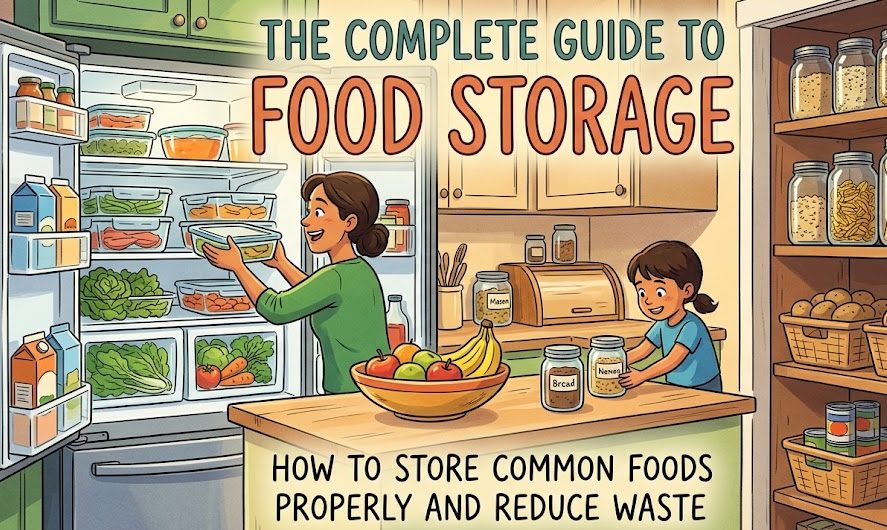
Food Storage — The Complete Guide to Food Storage
A practical guide to storing common foods properly keeping your kitchen organized protecting food quality and reducing unnecessary waste
Why Proper Food Storage Matters
Food storage is an important part of everyday kitchen management. The way food is stored can affect its freshness quality texture and overall usability. Proper storage also helps households use ingredients before they spoil and can reduce the amount of food that gets thrown away.
Different foods need different storage conditions. Some foods are better kept in a cool dry pantry while others need refrigeration or freezing. Understanding these basic differences can make your kitchen more organized and help you manage groceries more efficiently.
Good food storage does not require expensive equipment. Clean containers a well organized refrigerator and a simple storage routine can make a significant difference.
When storing food always consider the type of food the required temperature the available storage space and how soon you expect to use it.
Understanding the Main Storage Areas
Most kitchens use three main storage areas for food. These include the pantry refrigerator and freezer. Each area serves a different purpose.
A pantry or dry storage area is useful for foods that do not require refrigeration. The area should be clean dry and away from excessive heat and moisture.
Refrigeration is useful for many perishable foods and prepared dishes. Keeping the refrigerator organized makes it easier to find ingredients and use them on time.
Freezing can help preserve suitable foods for longer periods. Foods should be packaged properly to reduce moisture loss and freezer damage.
Some foods can remain at room temperature for a limited period. Keep them in a clean suitable location and follow appropriate storage guidance.
How to Store Fruits Properly
Fruits have different storage requirements. Some fruits can remain at room temperature while others benefit from refrigeration after purchase or once they become ripe.
Before storing fruit check for damaged or spoiled pieces. One damaged item can affect nearby produce. Handle fruit gently and avoid unnecessary moisture when storing foods that are sensitive to it.
Some fruits produce natural gases as they ripen which can speed up ripening in nearby produce. Keeping different types of fruit separated when appropriate can help with better organization.
How to Store Vegetables
Vegetables should generally be stored according to their individual needs. Some vegetables benefit from refrigeration while others are better suited to a cool dry storage area.
Remove visibly damaged pieces before storage and keep vegetables in suitable containers or storage bags when appropriate. Avoid packing produce too tightly because air circulation can help maintain quality for some vegetables.
Check stored vegetables regularly. Using older produce first is a simple habit that can reduce waste.
Storing Dairy Products
Dairy products are generally perishable and should be handled carefully. Keep products such as milk yogurt and other refrigerated dairy foods in appropriate cold storage.
Keep dairy containers closed when they are not being used. Check product labels and follow the storage instructions provided by the manufacturer.
Organizing dairy products together can make it easier to see what needs to be used first. Avoid leaving perishable dairy products at room temperature for extended periods.
Storing Eggs
Egg storage should follow the guidance provided for the eggs available in your location. If eggs are sold refrigerated they should generally remain refrigerated.
Keep eggs in their original container when practical. This can help protect them and makes it easier to check the date information on the package.
Avoid repeatedly moving eggs between warm and cold conditions. Keeping them in a consistent suitable storage environment is a better approach.
Storing Meat and Poultry
Raw meat and poultry require careful storage because they are highly perishable foods. Keep them refrigerated or frozen according to when you plan to use them.
Place raw meat in sealed packaging or suitable containers to help prevent juices from contacting other foods. Store these foods in a way that reduces the risk of cross contamination.
If you are not planning to use meat soon freezing may be an option for suitable products. Divide larger quantities into practical portions before freezing so you can use only what you need later.
Keep raw meat poultry and seafood separate from foods that are ready to eat. Wash hands surfaces and utensils properly after handling raw products.
How to Store Cooked Food and Leftovers
Leftovers are useful because they can turn one cooking session into more than one meal. However they need to be handled and stored properly.
After cooking food allow it to be handled according to appropriate food safety practices and transfer suitable leftovers into clean storage containers. Refrigerate or freeze foods as appropriate rather than leaving perishable foods at room temperature for long periods.
Use shallow containers when appropriate so larger quantities of food can cool more efficiently. Keep containers covered and label them when useful.
Choosing the Right Food Containers
Good containers can make food storage much easier. The best container depends on the type of food and how it will be stored.
Glass containers can be useful for many refrigerated foods and prepared meals. They are easy to clean and can be convenient for organizing leftovers.
Reusable food storage boxes can help organize prepared foods ingredients and leftovers while keeping them covered.
Use suitable freezer safe containers or packaging when freezing food. Leave appropriate space when required because some foods expand during freezing.
Suitable storage bags can be useful for portions of produce ingredients and foods prepared for freezing.
How to Organize Your Refrigerator
A well organized refrigerator makes food easier to find and can help you notice which ingredients need to be used first.
Keep foods in suitable areas based on the refrigerator design and manufacturer guidance. Avoid overcrowding the refrigerator because proper airflow can be important for maintaining consistent cooling.
- Keep food covered whenever appropriate
- Check older foods before opening newer packages
- Clean spills as soon as practical
- Keep raw foods separated from ready to eat foods
- Review stored leftovers regularly
- Follow storage instructions on packaged foods
How to Organize a Pantry
A pantry becomes much easier to manage when similar foods are stored together. Keep dry goods in clean suitable containers when appropriate and protect them from moisture heat and pests.
Group similar ingredients together. For example grains can stay together while baking ingredients snacks and canned products can have their own areas.
Place older products where they are easy to see and use. Newer products can be placed behind them when practical. This simple system can help reduce forgotten food.
How Freezing Can Reduce Food Waste
Freezing can be useful when you have more food than you expect to use soon. Suitable foods can be divided into portions and stored for later use.
Before freezing consider how you plan to use the food later. Small portions can be easier to defrost and use than one large frozen package.
Use appropriate packaging and label containers with useful information such as the food name and storage date. This makes it easier to identify items later.
Use Older Food First
One of the easiest ways to reduce food waste is to make older suitable food easier to see. When groceries are added to your kitchen place newer items behind older items whenever practical.
This approach encourages you to use food that has been stored longer before opening newer packages.
Regularly check your refrigerator pantry and freezer. A few minutes of organization each week can prevent forgotten ingredients from sitting unused.
Common Food Storage Mistakes
One common mistake is storing every food in the same way. Different foods have different requirements so it is important to follow suitable storage guidance.
Another mistake is keeping food in containers that are not properly closed. Open containers can allow moisture odors or contaminants to affect food quality.
Overcrowding storage areas is another problem. When shelves and refrigerators become difficult to navigate it is easier to forget about food and harder to identify what needs to be used.
Ignoring labels and storage instructions can also create problems. Packaged foods often provide useful information about storage conditions and handling.
A Simple Weekly Food Storage Routine
- Check your refrigerator before buying groceries
- Review pantry items and identify foods that should be used soon
- Organize new groceries when they arrive
- Place older suitable items where they are easy to see
- Store perishable foods using appropriate conditions
- Label leftovers and prepared foods when useful
- Review your storage areas at the end of the week
Food Storage and Reducing Waste
Food waste often happens because people buy more than they need or forget about ingredients that are already available. Better storage can help prevent both problems.
Before shopping check what you already have. Plan a few meals around ingredients that need to be used soon. Store foods correctly after shopping and keep your storage areas organized.
Use leftovers creatively when they are still suitable and safe to eat. A planned leftover meal can be an easy way to use food instead of allowing it to remain forgotten in the refrigerator.
Final Thoughts
Proper food storage is a simple household skill that can make a big difference in everyday kitchen organization. Understanding where and how to store different foods can help protect food quality and make groceries easier to manage.
Keep pantry foods in suitable dry conditions and refrigerate or freeze perishable foods according to appropriate storage guidance. Use clean containers and keep raw foods separated from ready to eat foods.
Regularly check your refrigerator pantry and freezer so you know what you have available. Using older suitable foods first can reduce unnecessary waste and help you get more value from every grocery trip.
You do not need a complicated system. A clean kitchen organized storage areas suitable containers and a few consistent habits are enough to build a practical food storage routine.