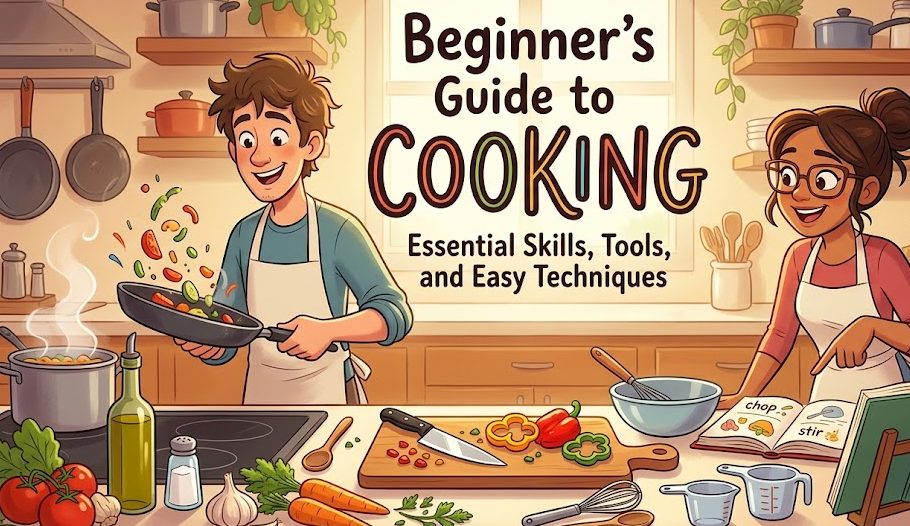
Cooking for Beginners — A Complete Beginner’s Guide to Cooking
Learn the essential cooking skills tools preparation methods and simple techniques that can help anyone become more comfortable and confident in the kitchen
Getting Started With Cooking
Learning to cook can feel difficult when you are just starting out. A kitchen contains many tools ingredients and cooking methods that may seem confusing at first. The good news is that you do not need advanced skills to prepare enjoyable meals. Cooking becomes easier when you understand a few basic techniques and practice them regularly.
Beginner cooking is mainly about learning how ingredients behave when they are heated mixed seasoned or prepared in different ways. Once you understand these basics you can start creating meals without depending completely on detailed recipes.
The best approach is to start with simple dishes. Eggs vegetables rice pasta chicken soup sandwiches and basic sauces are useful foods for learning fundamental skills. These dishes allow you to practice cutting mixing boiling frying baking and seasoning without making the process unnecessarily complicated.
Do not try to learn everything at once. Choose one cooking technique and practice it several times before moving to something more advanced.
Essential Kitchen Tools for Beginners
You do not need an expensive kitchen to become a good cook. A small collection of reliable tools is enough for most beginner meals. Having the right tools also makes preparation safer and more comfortable.
A sharp chef knife is one of the most useful kitchen tools. It can be used for chopping vegetables cutting meat and preparing many other ingredients.
A stable cutting board gives you a safe surface for preparing ingredients. Keeping separate boards for different food types can also help with kitchen hygiene.
A good frying pan is useful for eggs vegetables chicken pancakes and many quick meals.
A medium sized cooking pot is useful for rice pasta soups vegetables and other dishes that require boiling or simmering.
A spatula helps turn food while cooking and can be useful when preparing eggs vegetables and other pan cooked dishes.
Measuring cups and spoons can help beginners follow recipes accurately and understand ingredient quantities.
Basic Cooking Skills Everyone Should Learn
Cooking becomes much easier when you learn a few fundamental skills. These skills are useful across many different recipes and cuisines.
Knife Skills
Learning how to safely hold and use a knife is one of the first important cooking skills. Start with simple vegetables such as onions carrots potatoes and bell peppers. Keep your cutting board stable and use slow controlled movements.
You do not need to cut ingredients quickly. Accuracy and safety are more important than speed. With regular practice your cutting technique will naturally become faster.
Boiling
Boiling is one of the simplest cooking methods. Water is heated until it reaches a strong bubbling point. This method is commonly used for pasta rice potatoes eggs and some vegetables.
Learning to control heat is important because different foods require different cooking times. Strong heat is not always better. Once the water reaches the required temperature you can often reduce the heat to maintain a controlled cooking process.
Frying
Frying involves cooking food in a pan with oil or another cooking fat. It is commonly used for eggs vegetables chicken and many quick meals.
Beginners should learn how to control the temperature of the pan. If the pan becomes too hot food can burn quickly. If the temperature is too low food may become greasy or take too long to cook.
Baking
Baking uses controlled heat inside an oven. It is useful for bread cakes vegetables casseroles and many other foods. Baking often requires accurate measurements because small changes in ingredient quantities can affect the final result.
Simmering
Simmering means cooking food gently at a temperature below a strong boil. It is useful for soups sauces curries and many slow cooked dishes. Simmering allows flavors to develop gradually while keeping the cooking process controlled.
How to Prepare Ingredients Before Cooking
Good preparation can make cooking much easier. Professional kitchens often prepare ingredients before turning on the main cooking equipment. Beginners can use the same basic idea at home.
- Read the complete recipe before starting
- Wash ingredients that require washing
- Cut vegetables before heating the pan
- Measure important ingredients in advance
- Keep cooking tools nearby
- Make sure the cooking area is clean
This preparation process helps prevent situations where food starts cooking while you are still searching for ingredients. It also makes cooking more enjoyable because you can concentrate on the food instead of rushing between different tasks.
Understanding Heat and Temperature
Heat control is one of the most important parts of cooking. Many beginner mistakes happen because the heat is too high or too low.
High heat is useful when you need to quickly brown or sear food. Medium heat works well for many everyday cooking tasks. Low heat is useful when food needs more time to cook gently or when you want to prevent burning.
Instead of always using the highest heat setting start with moderate heat and observe how the food reacts. You can increase or decrease the temperature as needed.
Learn to watch the food rather than relying only on the cooking time. Color texture smell and sound can provide useful clues about how the food is progressing.
Learning How to Season Food
Seasoning can completely change the taste of a dish. Salt is one of the most common seasonings but it is not the only option. Herbs spices garlic ginger pepper citrus and other ingredients can add different flavors.
Beginners should avoid adding large amounts of seasoning immediately. Start with a small amount and taste the food when it is safe to do so. You can usually add more seasoning but removing too much seasoning from a dish can be difficult.
Learning seasoning takes practice because every ingredient has a different natural flavor. Fresh vegetables may need less seasoning while some proteins and grains may benefit from stronger flavors.
Easy Meals for Cooking Practice
Choosing simple meals is an excellent way to build confidence. The goal is not to prepare complicated restaurant style dishes. The goal is to practice basic skills while making food that you actually enjoy eating.
Scrambled eggs are useful for practicing pan heat timing stirring and seasoning.
Vegetable rice helps beginners practice chopping cooking grains and combining ingredients.
Pasta is useful for learning boiling timing and basic sauce preparation.
Roasted vegetables are an easy way to practice oven cooking temperature and seasoning.
A Simple Beginner Cooking Routine
A regular cooking routine can help you improve faster. You do not need to spend hours every day in the kitchen. Even a few simple meals each week can provide useful practice.
- Choose one simple dish that you already enjoy eating
- Read the complete recipe before beginning
- Prepare and organize all ingredients
- Set up the required cooking tools
- Start cooking using moderate heat when appropriate
- Watch the food and adjust the heat when necessary
- Taste and adjust seasoning carefully
- Clean the cooking area after finishing
Common Beginner Cooking Mistakes
Mistakes are a normal part of learning how to cook. Even experienced cooks sometimes burn food over season dishes or misjudge cooking times.
One common mistake is starting to cook without preparing ingredients first. Another is using extremely high heat because it seems faster. High heat can quickly burn the outside of food while leaving the inside undercooked.
Another common mistake is constantly changing a recipe without understanding the purpose of each ingredient. When learning it is useful to follow a recipe closely. After you understand the basic technique you can begin experimenting.
Do not become discouraged when a meal does not turn out perfectly. Write down what went wrong and try again. Cooking improves through repetition and observation.
Kitchen Safety for Beginners
Safety should always be part of cooking. Keep knife blades away from your fingers and use a stable cutting surface. Be careful around hot pans boiling water ovens and hot oil.
Keep handles positioned safely so they are not easily knocked over. Clean spills quickly because wet or oily surfaces can become slippery. Wash your hands and keep food preparation areas clean.
Raw meat poultry and eggs should be handled carefully to reduce the risk of food contamination. Use clean utensils and surfaces and cook foods to safe internal temperatures when required.
How to Become More Confident in the Kitchen
Confidence comes from repetition. The first time you cook something it may take longer than expected. After making the same meal several times you will begin to recognize cooking stages naturally.
You will start noticing when onions are ready when vegetables need more heat and when food needs additional seasoning. These observations become part of your cooking instincts.
Try keeping a simple list of meals you have prepared successfully. Over time you can create your own collection of reliable dishes. Once you are comfortable with basic recipes you can start changing ingredients flavors and cooking methods.
Final Thoughts
Cooking is a practical skill that becomes easier with regular practice. You do not need professional equipment expensive ingredients or advanced culinary knowledge to get started. A few basic tools simple ingredients and a willingness to practice are enough.
Begin with simple meals and focus on learning one technique at a time. Practice knife skills heat control boiling frying baking seasoning and ingredient preparation. Pay attention to what happens during cooking and learn from every result.
The most important part of becoming a better cook is consistency. Every meal gives you another opportunity to understand ingredients and improve your technique. With time the kitchen can become a comfortable place where you can prepare fresh meals with confidence and creativity.