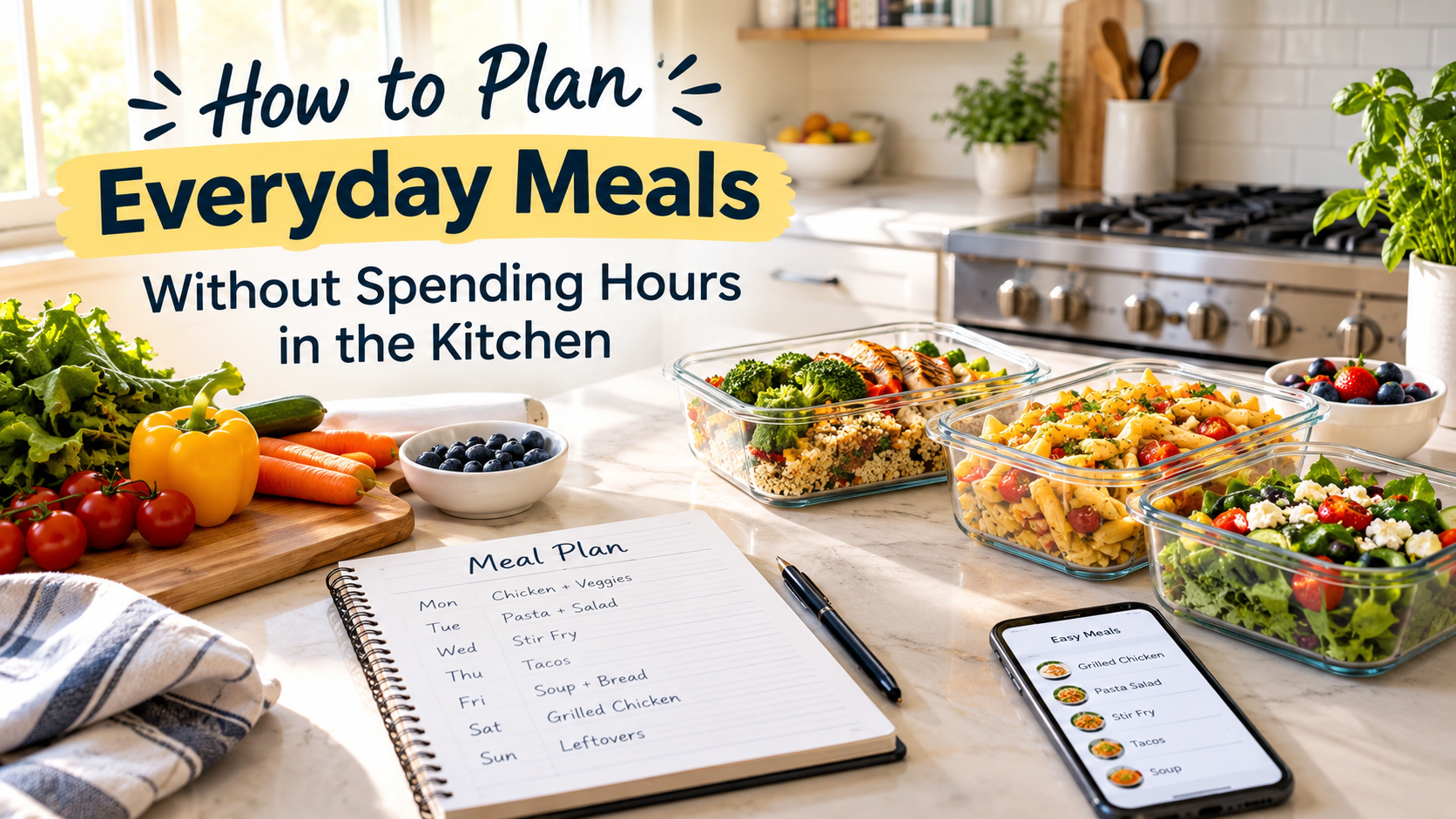
The hardest part of everyday cooking is often not the cooking itself. It is deciding what to make, finding the ingredients, preparing everything, and then cleaning up afterward. When those tasks pile up after a long day, even a simple homemade meal can feel like a major project.
A practical meal routine can change that. Instead of preparing elaborate dishes every day, you can organize meals around a few efficient habits: repeat useful ingredients, cook components that work in more than one meal, keep quick options available, and match the amount of cooking to the time you actually have. The result is a kitchen routine that saves effort without turning every meal into the same thing.
The 30-Minute Mindset
You do not need to cook an entire meal from scratch every evening. The real time-saver is deciding which parts can be prepared quickly, reused, cooked ahead, or combined with convenient ingredients.
1. Stop Planning Seven Completely Different Dinners
Variety is enjoyable, but too much variety creates unnecessary work. If every dinner requires a different protein, vegetable, sauce, grain, and cooking method, your shopping list becomes longer and your preparation time increases.
Instead, choose a handful of meals that share ingredients. For example, cooked chicken could appear in a rice bowl one evening and a wrap the following day. Roasted vegetables might accompany dinner and later become part of an omelet or pasta dish.
This approach creates variety through combinations rather than requiring a completely new cooking process every night.
Prepare enough for more than one suitable meal.
Use fresh or frozen options that work across different dishes.
Rice, pasta, potatoes, bread, or another familiar base can support several meals.
2. Create a Short List of “Fast Meals”
Every household benefits from meals that can be prepared when time is limited. These meals should require few steps and little active attention.
Examples include scrambled eggs with toast and vegetables, pasta with a quick sauce, a simple stir-fry, bean and rice bowls, sandwiches with soup, baked potatoes with toppings, or a quick vegetable omelet.
Keep the ingredients for several of these meals available regularly. That way, a busy day does not automatically turn into a decision about ordering food or skipping a proper dinner.
3. Do Small Preparation Tasks Before You Need Them
Meal preparation does not have to mean spending half a day cooking. Often, ten or fifteen minutes of small preparation can remove a much larger amount of work from the next meal.
Wash produce, chop vegetables that will be used soon, portion ingredients, or prepare a basic grain when it makes sense. You can also organize frequently used ingredients so they are easy to find.
The important distinction is between useful preparation and unnecessary preparation. Do not spend hours preparing food merely because meal-prep culture suggests that everything should be cooked in advance. Prepare what genuinely saves you time.
4. Cook Components Instead of Complete Meals
Preparing complete meals ahead of time can work for some households, but cooking flexible components often provides more freedom.
Think in building blocks
Prepare a suitable combination of:
- A cooked grain or starch
- A protein or plant-based protein
- One or two prepared vegetables
- A simple sauce, dressing, or seasoning mixture
Those components can be combined differently throughout the week. One day they might become a bowl; another day they can be wrapped in a tortilla or served alongside eggs. This gives you flexibility while avoiding repeated chopping and cooking.
5. Use the Oven and One-Pan Meals to Your Advantage
Some cooking methods are efficient because they allow several ingredients to cook at once. A sheet-pan meal, for example, can combine vegetables and a suitable protein while leaving you free to prepare another part of the meal or clean the counter.
One-pot soups, stews, pasta dishes, casseroles, and skillet meals can offer a similar advantage. Fewer cooking vessels generally mean less active management and less cleanup afterward.
When choosing recipes, do not judge them only by the stated cooking time. Consider active time as well. A meal that takes 40 minutes but requires only ten minutes of hands-on work may fit a busy evening better than a 25-minute recipe that demands constant attention.
6. Make Your Refrigerator Work Like a Menu
It is much easier to cook quickly when you can see what is available. Keep frequently used foods organized so older ingredients are not forgotten behind newer purchases.
Before starting dinner, take a quick look through the refrigerator and ask three questions:
- What needs to be used soon?
- What cooked ingredients are already available?
- What simple meal could combine them?
This habit can prevent unnecessary grocery trips and reduce food waste. It also encourages creativity because you start thinking about combinations rather than waiting for a recipe to tell you exactly what to buy.
7. Keep Convenient Ingredients Without Feeling Guilty
Home cooking does not have to mean that every ingredient was washed, chopped, cooked, and prepared entirely by you. Frozen vegetables, canned beans, prepared broth, prewashed greens, jarred sauces, and other convenient ingredients can make everyday cooking much more manageable.
The key is choosing convenience where it actually saves meaningful effort. There is no benefit in spending twenty minutes doing a task that can be safely and sensibly simplified.
Convenience is a tool, not a shortcut to avoid
If a convenient ingredient helps you cook at home more consistently, it has done its job. The objective is a sustainable routine, not proving how much work you can do from scratch.
8. Give Different Days Different Cooking Levels
Your available time is unlikely to be identical every day. Your meal plan should reflect that.
This prevents the common mistake of planning a long recipe for the busiest evening of the week.
9. Turn Leftovers Into a Second Meal
Leftovers become much more useful when you plan them intentionally. Instead of asking, “What do I do with this tomorrow?” think about a second use while preparing the original meal.
Extra roasted vegetables can become a filling for a wrap. Cooked grains can support a quick bowl. Leftover chicken can be added to salad, soup, sandwiches, or tacos. A larger batch of soup can provide an almost effortless meal on another day.
Store leftovers appropriately and use them within safe storage periods. The purpose is to save work, not to keep food indefinitely.
10. Simplify Cleanup While You Cook
Cooking time is only part of the burden. A meal that takes 20 minutes to prepare but leaves a mountain of dishes can still feel exhausting.
Clean small items while food cooks when it is safe to do so. Put ingredients away after using them, keep a discard bowl nearby for scraps, and choose equipment thoughtfully. If two cooking methods produce similar results, the one requiring fewer pans may be the better choice on a busy evening.
Do not let cleanup interfere with cooking safety. Food that needs attention should always take priority over washing a utensil.
11. Use a Weekly Shopping Rhythm
Frequent small grocery trips can consume more time than expected. A simple weekly shopping routine can reduce that burden, especially when your meals share ingredients.
Before shopping, check your pantry, refrigerator, and freezer. Then make a list based on the meals you expect to prepare. Group the list by sections such as produce, proteins, refrigerated foods, pantry items, and frozen foods.
A smarter shopping question
Instead of asking, “What ingredients do I need for each recipe?” ask, “Which ingredients can support several meals this week?” That small change can shorten both your list and your preparation time.
12. Keep Two Emergency Dinners Available
Even a carefully organized schedule will occasionally fall apart. Someone works late, plans change, or nobody has the energy to cook. Having emergency meals available keeps one difficult evening from disrupting the entire week.
Choose options that require almost no planning. Keep suitable pantry staples, frozen foods, eggs, bread, canned beans, pasta, or other preferred basics available according to your household’s needs.
The emergency meal does not need to be exciting. Its purpose is to provide a dependable alternative when the normal plan is no longer realistic.
A Simple Weekly Routine That Saves Time
What to Stop Doing If You Want More Time
- Stop choosing complicated recipes just because they look impressive.
- Stop buying large numbers of ingredients that have only one possible use.
- Stop assuming every meal must be cooked entirely from scratch.
- Stop scheduling the longest recipes for your busiest evenings.
- Stop preparing food in advance that your household is unlikely to eat.
- Stop treating leftovers as something that has to be eaten exactly as they were originally served.
Build Your Own Time-Saving Meal Formula
Once the basic system is comfortable, create a personal formula that suits your household. For example, you might choose one protein, one grain, two vegetables, and two sauces each week, then combine them differently.
Another household may prefer a rotation of pasta night, taco night, soup night, roast night, and leftover night. There is no universally correct system. The best one is the system that reduces decisions while still giving everyone food they are happy to eat.
The Real Secret to Faster Everyday Cooking
Saving time in the kitchen is less about moving faster and more about removing unnecessary work. A thoughtful meal plan means fewer decisions, overlapping ingredients, reusable components, and meals that match the time available.
Keep your routine flexible, use convenient ingredients when they make sense, and allow leftovers to do some of the work. Once these habits become automatic, preparing everyday meals can become a predictable part of your routine rather than an activity that consumes your entire evening.