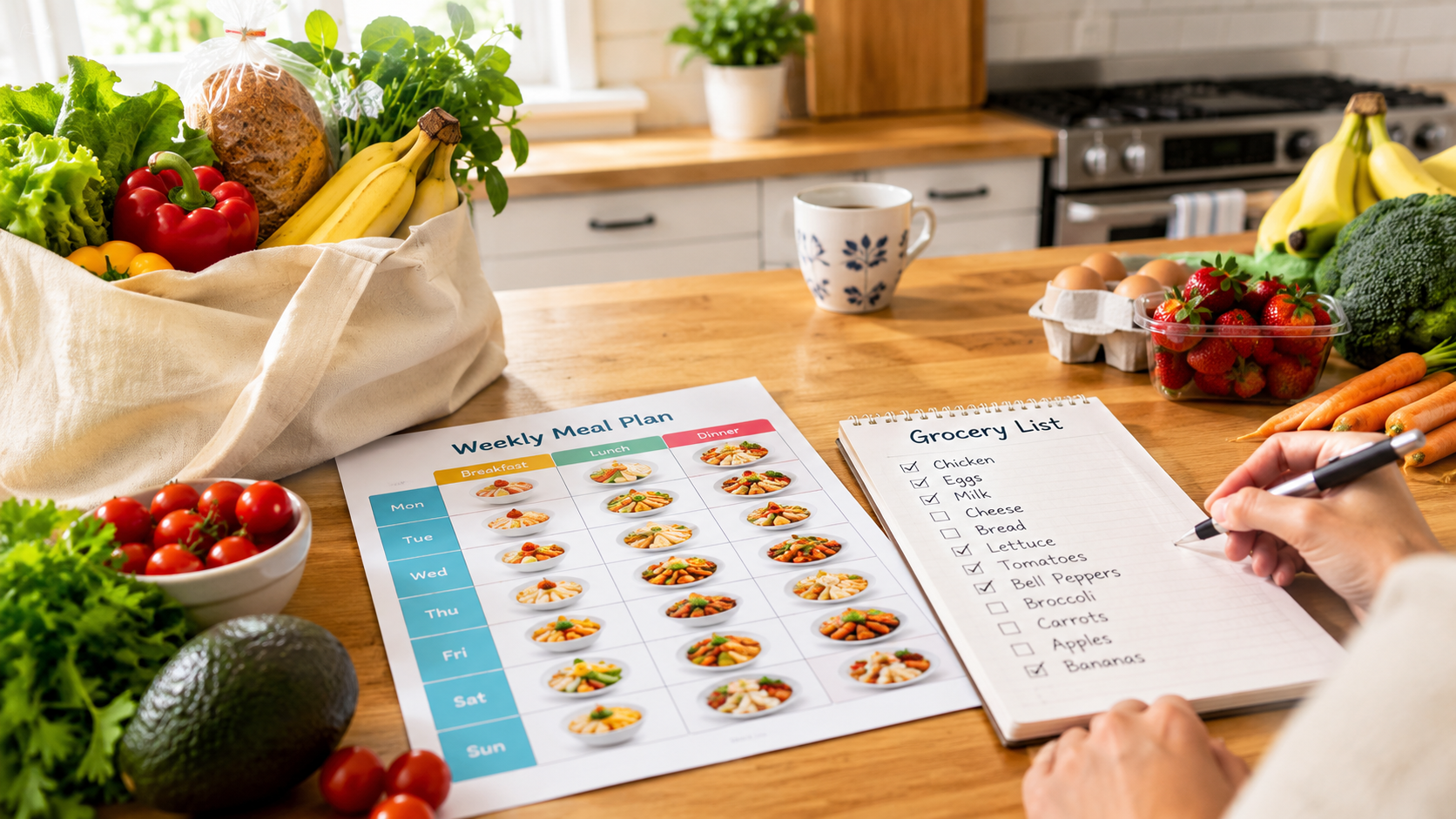
A grocery list works best when it reflects the meals you actually plan to eat. Instead of writing down ingredients as they come to mind, connect your shopping list directly to the week’s breakfasts, lunches, dinners, snacks, and flexible meals. This simple change can make shopping faster, reduce forgotten items, and help prevent buying food that never gets used.
Many grocery trips become unnecessarily complicated because shopping and meal planning are treated as two separate tasks. Someone chooses meals in one place, checks the pantry later, remembers a few ingredients while driving to the store, and then tries to fill the gaps from memory. The result is often an overflowing cart alongside missing essentials.
A better approach is to build the grocery list from the weekly meal plan outward. Every item should have a reason for being on the list, while flexible ingredients should be selected because they can support several meals.
Start With the Week, Not the Store
Before opening a grocery app or walking into a supermarket, look at the week ahead. Consider work schedules, school commitments, social plans, busy evenings, and days when you will have more time to cook.
You do not need seven elaborate dinners. A practical weekly plan might contain a few proper meals, one leftovers night, one quick meal, and a flexible option for unexpected changes.
Choose meals with short preparation and minimal cleanup.
Plan familiar meals that use ingredients efficiently.
Leave room for leftovers or whatever needs to be used first.
1. Write Down the Meals You Expect to Make
Begin with a simple list of meals rather than ingredients. For example, you might plan vegetable omelets, chicken rice bowls, pasta with tomato sauce, bean tacos, and a roasted vegetable dinner.
Once the meals are visible, it becomes much easier to identify what you actually need. It also exposes opportunities to reuse ingredients before you start shopping.
For instance, if three meals use onions, there is little reason to treat them as three separate shopping requirements. You simply need enough onions for the combined amount.
2. Check What You Already Have
This step can save more money and time than almost any clever shopping trick. Before adding an ingredient to your list, check your refrigerator, freezer, and pantry.
Look for staples such as rice, pasta, flour, canned foods, cooking oils, spices, frozen vegetables, sauces, and other frequently used ingredients. Pay particular attention to items that are close to their best quality and could be incorporated into this week’s meals.
The “use it first” question
Before buying something new, ask: “Do I already have an ingredient that could perform a similar role?” This encourages practical substitutions and reduces unnecessary purchases.
3. Break Each Meal Into Ingredient Groups
After checking your existing supplies, take each planned meal and break it into basic components. This makes missing ingredients easier to identify.
| Meal component | What to consider |
|---|---|
| Main | Protein, beans, eggs, poultry, seafood, or another centerpiece |
| Base | Rice, pasta, potatoes, bread, grains, or wraps |
| Produce | Fresh, frozen, or canned vegetables and fruit |
| Flavor | Herbs, spices, sauces, dressings, aromatics, and condiments |
This method is especially useful when a recipe contains many ingredients. Rather than copying every line directly into your grocery app, you can identify what is essential and what is already covered by your kitchen supplies.
4. Combine Ingredients Across Multiple Meals
One of the smartest ways to simplify grocery shopping is to choose ingredients with several potential uses. A single purchase should ideally support more than one meal whenever practical.
Rice bowls, wraps, salads, soups
Omelets, pasta, sandwiches, salads
Sauces, salads, sandwiches, bowls
Breakfast, sauces, dips, toppings
This does not mean every ingredient must appear in multiple dishes. Some specialized ingredients are worthwhile when they are central to a favorite meal. The goal is simply to avoid filling your refrigerator with products that have only one possible use.
5. Organize the List by Store Section
Once the required ingredients are known, reorganize them according to how you move through your usual store. This is much more efficient than keeping items in the same order as the recipes.
- Produce: vegetables, fruit, herbs, and fresh ingredients.
- Refrigerated: dairy, eggs, sauces, and other chilled foods.
- Meat or alternatives: poultry, seafood, tofu, beans, or other proteins.
- Pantry: grains, pasta, canned foods, seasonings, and baking supplies.
- Frozen: frozen vegetables, fruit, and suitable convenience foods.
- Household items: anything unrelated to meals that you still need.
A categorized list reduces backtracking and makes it easier to notice when an entire category has been overlooked.
6. Add Quantities Before You Shop
“Buy chicken” is less useful than “buy enough chicken for two planned dinners.” Quantity matters because vague lists encourage both overbuying and underbuying.
For ingredients that are easy to measure, estimate how much the household actually needs. For produce and packaged items, consider the number of meals they will support and how quickly they are likely to be consumed.
You do not need laboratory-level precision. A reasonable estimate is enough to create a useful shopping plan.
7. Separate “Must Buy” From “Nice to Have”
Not every item deserves the same priority. Mark the ingredients that are essential to planned meals separately from optional extras.
Must Buy
Ingredients that are difficult to replace or are required for several planned meals.
Optional
Extras, treats, specialty ingredients, or items you can comfortably skip.
This distinction is particularly useful when prices are higher than expected. You can protect the core meal plan without feeling that the entire shopping trip has failed.
8. Plan for One or Two Flexible Meals
A weekly plan should guide you without becoming a rigid contract. Leave at least some space for leftovers, unexpected schedule changes, or ingredients that need to be used sooner than expected.
For example, instead of assigning a specific dinner to every single evening, keep one night open for a combination of remaining vegetables, cooked grains, eggs, leftovers, or another simple option.
This flexibility also helps prevent food waste because you have an intentional place for ingredients that remain at the end of the week.
9. Watch for Ingredients That Spoil Quickly
Fresh food can create problems when the shopping list is built without considering timing. Delicate greens, berries, herbs, and some fresh produce may need to be used earlier than sturdier vegetables or pantry staples.
Place perishable foods into meals that occur earlier in the week when appropriate. Save longer-lasting ingredients for later meals. Frozen alternatives can also be useful when fresh produce is unlikely to be consumed quickly.
10. Keep a Small List of Reliable Staples
Some foods are worth keeping available regardless of the exact weekly menu. These staples can rescue a meal when plans change.
Depending on your household, that might include pasta, rice, canned beans, eggs, frozen vegetables, bread, broth, basic seasonings, or other foods you regularly use. When these staples are already available, you can often create a simple meal without another trip to the store.
A Grocery List That Thinks Ahead
Step 1: Look at the coming week’s schedule.
Step 2: Choose a realistic mix of meals.
Step 3: Check the refrigerator, freezer, and pantry.
Step 4: List ingredients needed for each meal.
Step 5: Combine repeated ingredients and estimate quantities.
Step 6: Add flexible meals and dependable staples.
Step 7: Rearrange everything by store section before shopping.
Make the System Easier Each Week
Your first few grocery lists may still require some thought. That is normal. After several weeks, you will begin noticing patterns. You will learn how much produce your household actually consumes, which meals generate useful leftovers, and which ingredients repeatedly go unused.
Use those observations to improve the next list. If something consistently remains untouched, buy less of it or remove it. If a particular ingredient repeatedly saves a busy evening, keep it on your regular-staples list.
The goal is not to create a perfect grocery list. It is to create a dependable system that connects shopping with real meals and real schedules.
The Bottom Line
The most useful grocery list is built around how you actually eat. Start with the week’s meals, check what you already own, combine ingredients across dishes, estimate sensible quantities, and organize the final list around your shopping route. Add flexibility for leftovers and unexpected changes, and keep a few dependable staples on hand.
When grocery shopping becomes an extension of meal planning rather than a separate chore, the entire routine becomes easier. You spend less time wondering what to buy, make better use of what you already have, and return home with ingredients that have a clear purpose.
Printable Weekly Grocery Template
“`Use this simple template each week to connect your grocery shopping with the meals you plan to prepare. Print it, save it digitally, or copy the categories into your preferred notes app.
Week of: ________________________________
Shopping Day: ______________________________
Weekly Meal Plan
| Day | Breakfast | Lunch | Dinner |
|---|---|---|---|
| Monday | |||
| Tuesday | |||
| Wednesday | |||
| Thursday | |||
| Friday | |||
| Saturday | |||
| Sunday |
Grocery List
Produce
☐ __________________________________
☐ __________________________________
☐ __________________________________
☐ __________________________________
☐ __________________________________
Protein & Alternatives
☐ __________________________________
☐ __________________________________
☐ __________________________________
☐ __________________________________
☐ __________________________________
Dairy & Refrigerated
☐ __________________________________
☐ __________________________________
☐ __________________________________
☐ __________________________________
☐ __________________________________
Pantry
☐ __________________________________
☐ __________________________________
☐ __________________________________
☐ __________________________________
☐ __________________________________
Frozen
☐ __________________________________
☐ __________________________________
☐ __________________________________
☐ __________________________________
☐ __________________________________
Household & Other
☐ __________________________________
☐ __________________________________
☐ __________________________________
☐ __________________________________
☐ __________________________________
Before You Shop
☐ Check refrigerator
☐ Check freezer
☐ Check pantry
☐ Combine repeated ingredients
☐ Estimate quantities
☐ Identify ingredients that need to be used first
☐ Keep one or two flexible meals available
____________________________________________________________________________