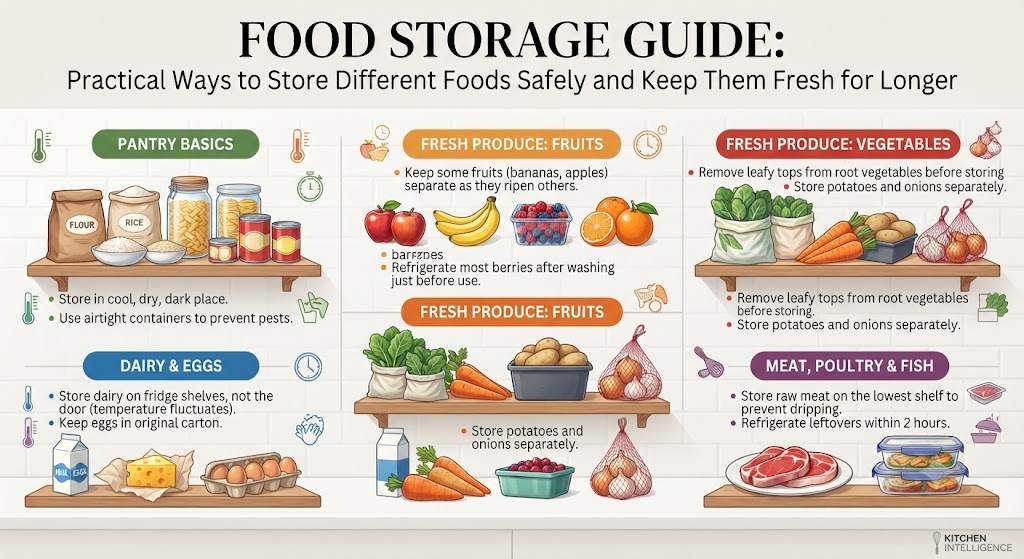
Practical Ways to Store Different Foods Safely and Keep Them Fresh for Longer
Proper food storage is one of the simplest ways to reduce waste, protect food quality, and make everyday cooking easier. Different foods require different storage conditions, so understanding where and how to keep them can make a noticeable difference. Fresh vegetables, fruit, dairy products, meat, cooked meals, bread, grains, and pantry ingredients all respond differently to temperature, moisture, air, and light.
Food can lose its freshness long before it looks obviously spoiled. Vegetables may become soft, bread can develop mold, dairy products can sour, and cooked meals may become unsafe when they are left at unsuitable temperatures. Good storage habits help slow these changes while also making it easier to keep an organized kitchen.
The goal is not simply to make food last as long as possible. Safe storage means keeping food at appropriate temperatures, using suitable containers, separating foods that should not come into contact, and paying attention to dates and visible changes. A few simple habits can make food storage safer and more efficient without requiring expensive equipment.
1. Start With the Right Storage Location
Every food does not belong in the refrigerator. Some foods need cold temperatures, some are better kept in a dry pantry, while others benefit from freezing. Choosing the correct storage location is the first step toward maintaining quality.
Refrigerator Foods
Fresh dairy products, many vegetables, cooked leftovers, opened sauces, eggs where required by local practice, and other perishable foods generally need refrigeration. Keep the refrigerator cold enough for safe storage and avoid packing it so tightly that air cannot circulate.
Freezer Foods
Meat, poultry, fish, some prepared meals, and certain fruits and vegetables can be frozen when longer storage is needed. Use suitable airtight packaging to reduce freezer burn and protect food quality.
Pantry Foods
Rice, flour, pasta, dry beans, unopened canned foods, spices, and many other dry ingredients are usually best stored in a cool, dry place away from direct sunlight and moisture.
Room-Temperature Foods
Some whole fruits, certain vegetables, bread, and other foods can remain outside the refrigerator for a limited period. Their ideal storage conditions depend on the specific food and the temperature of the room.
2. Store Fresh Vegetables Properly
Vegetables can lose texture and freshness quickly when exposed to excess moisture or unsuitable temperatures. Leafy greens generally benefit from refrigeration and should be kept relatively dry. Washing them immediately before storage can sometimes leave excess moisture that encourages deterioration, so washing close to the time of use may be preferable for certain vegetables.
Use breathable storage where appropriate, especially for produce that can become slimy when trapped in excessive moisture. Vegetables should also be checked regularly because one deteriorating item can affect nearby produce.
3. Handle Fruits According to Their Needs
Fruit storage varies considerably. Some whole fruits can remain at room temperature while they ripen and can later be refrigerated to slow further ripening. Other fruits are more sensitive to cold or moisture and may maintain better quality outside the refrigerator.
Bananas, for example, can ripen rapidly in warm conditions, while berries are highly perishable and generally benefit from refrigeration. Cut fruit should be treated differently from whole fruit because cutting exposes the interior to air and increases the opportunity for contamination.
When fruit is cut, place it in a clean, covered container and refrigerate it promptly. Keeping different fruits separated when practical can also help because some produce releases natural ripening gases that can speed up changes in nearby produce.
4. Store Meat, Poultry, and Fish With Extra Care
Raw meat, poultry, and seafood are among the foods that require particularly careful storage. Keep them refrigerated or frozen as appropriate and prevent their juices from contacting ready-to-eat foods.
Place raw animal products in sealed containers or leak-resistant packaging. Keeping them on a lower refrigerator shelf can reduce the risk of liquid dripping onto other foods. Wash hands, utensils, and surfaces after handling raw meat and avoid using the same cutting board for ready-to-eat foods without proper cleaning.
Cold Storage Matters
Perishable foods should not be left at room temperature for extended periods. When food needs refrigeration, move it into the refrigerator promptly and keep the refrigerator operating at a safe temperature. When in doubt about how long a perishable food has remained in unsafe conditions, food safety guidance should take priority over trying to save the food.
5. Keep Dairy Products Fresh
Milk, yogurt, cream, soft cheeses, and other dairy products should generally be refrigerated. Keep containers closed when they are not being used because exposure to air can affect quality and can allow odors from other foods to transfer.
It is also useful to store dairy products toward the colder parts of the refrigerator rather than relying on the refrigerator door for everything. Refrigerator doors experience more temperature changes because they are opened frequently.
Always pay attention to storage instructions printed on the package. Once a dairy product has been opened, its storage life may differ from the unopened product.
6. Protect Bread and Bakery Foods
Bread storage depends on how quickly it will be consumed and the surrounding climate. Bread kept in a dry, clean environment can remain useful for several days, while freezing is a practical option when you want to store it for longer.
Refrigeration can change the texture of some breads and may make them seem stale more quickly. Freezing is often more useful for long-term storage because slices can be removed as needed and warmed before eating.
Bakery products containing cream, custard, fresh dairy fillings, or other highly perishable ingredients generally require refrigeration according to the product’s storage instructions.
7. Store Rice, Flour, Pasta, and Dry Goods Correctly
Dry foods can remain usable for a long time when protected from moisture, insects, heat, and contamination. Store rice, flour, pasta, cereals, lentils, beans, and similar ingredients in clean, dry containers with secure lids.
Clear containers can be particularly useful because they make it easier to see how much food remains. Labeling containers with the purchase date or opening date can also help with household organization.
| Food Type | Useful Storage Approach | Main Concern |
|---|---|---|
| Rice and grains | Cool, dry, sealed container | Moisture and insects |
| Flour | Dry airtight container; refrigerate or freeze when appropriate | Moisture, pests, and rancidity |
| Pasta | Dry pantry container | Moisture and insects |
| Nuts and seeds | Sealed container; cooler storage for longer keeping | Heat and oxidation |
8. Use Airtight Containers for the Right Foods
Airtight containers can protect many foods from moisture, air, insects, and kitchen odors. They are especially useful for dry ingredients and opened packaged foods.
However, airtight storage is not automatically suitable for every food. Fresh produce that needs airflow may deteriorate faster when trapped in excessive moisture. Before transferring food into a sealed container, consider whether the food benefits from ventilation or requires refrigeration.
9. Store Cooked Food Safely
Leftovers can save considerable time during busy weeks, but cooked food should be handled carefully. After cooking, allow food to cool appropriately and refrigerate it within the recommended food-safety timeframe rather than leaving it at room temperature for extended periods.
Use shallow containers when practical so larger portions can cool more efficiently. Divide very large quantities into smaller portions before refrigeration or freezing. Labeling leftovers with the date can make it easier to use older portions first.
Prepare clean containers. Use containers that are suitable for food storage and make sure they are clean before adding leftovers.
Portion large meals. Divide large amounts into smaller portions to make cooling, reheating, and serving easier.
Refrigerate promptly. Do not leave cooked perishable food sitting out for unnecessarily long periods.
Label and organize. Mark containers with dates and keep older food visible so it is more likely to be used first.
10. Make Better Use of Your Freezer
The freezer is one of the most useful tools for reducing food waste. It allows many foods to be stored for much longer than they could remain refrigerated. Freezing is particularly useful when you have purchased more food than you can consume quickly.
Use packaging designed for freezing and remove as much excess air as practical. Air exposure can cause freezer burn, which affects texture and quality. Avoid filling containers completely when the food may expand during freezing.
Freezing does not improve the quality of food that was already deteriorating. It is better to freeze food while it is still fresh and suitable for consumption.
11. Keep Your Refrigerator Organized
An organized refrigerator is easier to manage and can help reduce food waste. Keep ready-to-eat foods protected from raw ingredients and use containers with secure lids whenever practical.
Try to avoid overcrowding the refrigerator. Cold air needs to circulate around the stored food. An excessively full refrigerator can make it harder to maintain consistent temperatures and can also hide older food.
A simple weekly check can make a major difference. Before buying more groceries, look through the refrigerator and identify foods that should be used soon.
12. Pay Attention to Food Labels and Condition
Food labels provide important information about storage, handling, and dates. Read the manufacturer’s instructions, particularly after opening a product. Some foods have specific refrigeration requirements that are easy to overlook.
At the same time, date labels should not replace common-sense food safety. Look at the condition of food and consider how it has been stored. If food has an unusual appearance, smell, texture, damaged packaging, or other signs of spoilage, it is safer not to consume it.
13. Reduce Food Waste With a Simple Rotation System
Food waste often happens because items are forgotten rather than because people intentionally buy too much. A simple first-in, first-out approach can help. Put newer products behind older products so older items are used first.
This method works particularly well for canned foods, grains, snacks, sauces, frozen foods, and other products that may remain in storage for extended periods.
14. Keep the Storage Area Clean
Clean storage spaces are an important part of food safety. Wipe refrigerator shelves and kitchen storage areas regularly, clean spills promptly, and check pantry corners for signs of insects or moisture.
Food containers should also be cleaned thoroughly before being reused. Do not simply add new food on top of old residue. A clean container reduces the chance of contamination and helps stored ingredients maintain their quality.
Frequently Asked Questions
Should all fruits and vegetables be refrigerated?
No. Storage requirements vary between different fruits and vegetables. Some are better at room temperature while others maintain quality better when refrigerated. Follow food-specific storage guidance and consider ripeness and local temperature conditions.
Is freezing food a good way to reduce waste?
Yes. Freezing can be useful when food cannot be consumed before its quality declines. Proper packaging and timely freezing are important for maintaining quality.
Why should raw meat be separated from other foods?
Raw meat, poultry, and seafood can contain harmful microorganisms. Keeping them separated helps prevent their juices from contaminating foods that may be eaten without further cooking.
Are airtight containers useful for food storage?
They are useful for many dry foods because they help protect against moisture, insects, air, and odors. However, some fresh foods require ventilation, so the container type should match the food.
How can I waste less food at home?
Plan meals around ingredients you already have, store foods correctly, label leftovers, keep older items visible, freeze suitable foods, and check the refrigerator and pantry before shopping.
Final Thoughts
Safe food storage does not require complicated equipment or expensive kitchen systems. The most useful habits are simple: choose the correct storage location, maintain appropriate refrigeration, protect food from moisture and contamination, use suitable containers, separate raw and ready-to-eat foods, and regularly check what needs to be used.
“`When these habits become part of your normal kitchen routine, food can stay fresher for longer, grocery spending can be used more efficiently, and less food is likely to end up in the bin. A well-organized refrigerator, freezer, and pantry can also make meal preparation easier because ingredients are easier to find and use at the right time.
The most important principle is to balance freshness with food safety. When storage conditions are uncertain or a perishable food has been kept improperly, protecting health should always come before trying to save the food.
“`