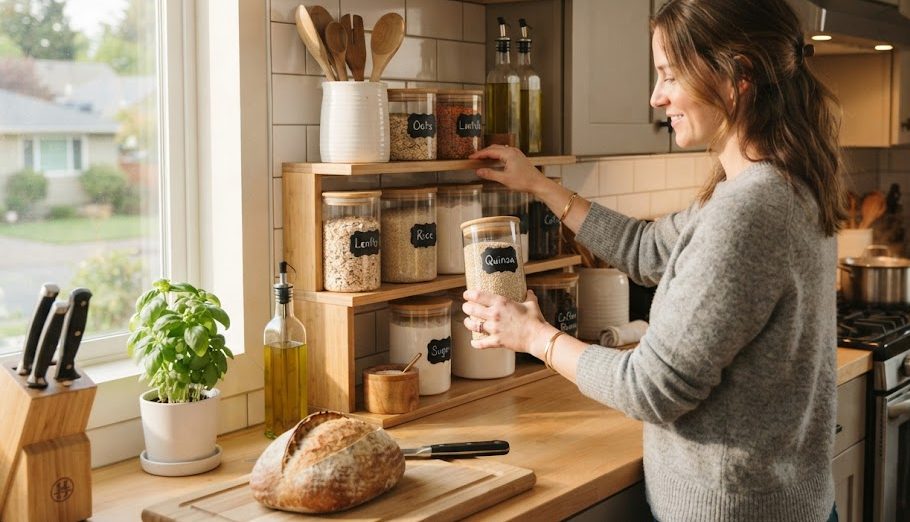
A kitchen becomes much easier to use when everyday ingredients are stored where you naturally expect to find them. Instead of searching through crowded cabinets, moving containers around the refrigerator, or discovering forgotten packages at the back of a shelf, a few simple organization habits can make common foods visible and accessible.
Organization does not have to mean transferring everything into matching containers or creating a picture-perfect pantry. The best system is one that works with the way you cook. Ingredients you use every day should be easy to reach, similar foods should stay together, and older products should remain visible enough to be used before newer ones.
With a little planning, your kitchen can become easier to navigate without becoming another project that requires constant maintenance.
Start by Observing How You Use Your Kitchen
Before moving everything around, pay attention to what you reach for most often. Your organization system should be based on real habits rather than an idealized kitchen layout.
If you make breakfast regularly, breakfast ingredients should be convenient. If you cook pasta several times a week, pasta and related ingredients should not be hidden behind rarely used baking supplies. If certain spices appear in almost every meal, they deserve an easy-to-reach location.
Keep these ingredients closest to your normal cooking area.
Store these where they remain easy to reach without taking prime space.
Less frequently used items can occupy higher or deeper storage areas.
Group Ingredients by Category
One of the simplest organizational principles is keeping similar foods together. When ingredients have predictable homes, you spend less time remembering where you put something.
Depending on your kitchen, useful categories might include grains and pasta, canned foods, baking ingredients, breakfast items, snacks, spices, sauces, cooking oils, fresh produce, dairy, proteins, and frozen foods.
The categories do not need to be perfect. They simply need to make sense to the people who use the kitchen.
If you often use pasta with tomato sauce and seasonings, keeping those ingredients relatively close together can make meal preparation more efficient.
Create Zones Instead of Organizing Every Item Individually
A kitchen does not need dozens of tiny storage systems. Larger zones are often easier to maintain.
| Zone | Useful items |
|---|---|
| Cooking zone | Oils, spices, frequently used sauces, cooking basics |
| Breakfast zone | Cereal, oats, spreads, coffee or tea supplies |
| Snack zone | Crackers, nuts, dried fruit, and other preferred snacks |
| Baking zone | Flour, sugar, baking ingredients, extracts, and related supplies |
These zones can exist across different cabinets and drawers. The goal is simply to create a mental map of the kitchen.
Keep the Most-Used Ingredients at Eye Level
Prime storage space should go to ingredients you actually use. If a particular shelf is easy to see and reach, fill it with foods that regularly appear in your meals.
Rarely used specialty ingredients do not need the same level of accessibility. Moving them to a higher shelf or less convenient cabinet can free up space for everyday essentials.
This principle works particularly well in small kitchens where every shelf has to perform a useful function.
Make Small Packages Easier to See
Small packets, spice containers, seasoning envelopes, and individual snack packages are easy to lose in deep cabinets. Instead of stacking them randomly, use a shallow container, small basket, drawer organizer, or another suitable solution to keep them grouped.
You should be able to see what you have without removing an entire collection of items first.
Visibility beats perfection
A simple basket that lets you see ten related packages can be more useful than a complicated storage system that looks attractive but makes ingredients difficult to access.
Use Clear Storage When It Solves a Problem
Transparent containers can make dry ingredients easier to identify, particularly when original packaging is bulky or difficult to stack. They can also help you notice when a staple is running low.
However, there is no need to transfer every food into a container. Keep foods in their original packaging when that is more convenient, especially when the packaging already protects the food and clearly displays important information.
If you transfer food, use appropriate food-safe storage containers and keep relevant product or date information available when necessary.
Arrange the Pantry So Older Items Stay Visible
One of the biggest reasons ingredients become difficult to find is that newer groceries are placed in front of older ones. This gradually pushes perfectly usable products into the back of the cabinet.
When putting groceries away, move older items toward the front and place newer products behind them where practical. This simple rotation habit helps turn your pantry into a first-in, first-out system.
- Pull older items toward the front.
- Group similar ingredients together.
- Remove empty packaging.
- Identify anything that should be used soon.
- Return newer purchases behind older products.
Organize the Refrigerator by Use, Not Just by Shape
Refrigerator shelves can become chaotic because different foods arrive in different packages. Rather than placing everything wherever there is an empty space, create broad areas for common categories.
Keep leftovers together when practical, group frequently used dairy products, and create a visible area for foods that should be used soon. The exact arrangement will depend on your refrigerator design and the manufacturer’s storage guidance.
Do not overcrowd the refrigerator simply to maximize capacity. Food should remain accessible, and the appliance needs appropriate air circulation to work effectively.
Create a “Use First” Section
A small designated area for ingredients that need attention can prevent food from disappearing behind newer groceries.
This could include an opened package, suitable leftovers, produce that needs to be consumed soon, or another ingredient that you deliberately want to remember.
Make the food visible.
Think of a meal that can use it.
Move it into a meal promptly.
Make Spices Easier to Identify
Spices often cause disproportionate amounts of kitchen searching. Small containers look similar, labels may face different directions, and frequently used seasonings can become buried behind less-used ones.
Arrange spices alphabetically, by cuisine, by frequency of use, or by another system that feels natural to you. There is no single correct method. The important thing is that you can predict where a seasoning will be before opening the cabinet.
Keep everyday spices closer to your main cooking area and place specialty seasonings elsewhere if space is limited.
Give Opened Packages a Dedicated Spot
Half-used bags and opened boxes often create pantry clutter because they do not fit neatly with unopened products. A small basket or designated shelf can keep these packages together.
This has another advantage: you can quickly see which ingredients have already been opened. That makes it easier to use existing supplies before opening another package of the same food.
Keep a Running List of Low Supplies
You do not have to inspect every cabinet before every grocery trip. Keep a simple running list for ingredients that regularly run low.
When you finish the last of a staple or notice that only a small amount remains, add it to the list immediately. A note on your phone, a paper list on the refrigerator, or another system you naturally remember to use can work.
Use a simple rule
If an ingredient is used frequently and has reached the amount where you would normally want a replacement, add it to the shopping list. This prevents the classic “I thought we still had some” problem.
Connect Ingredient Storage With Meal Planning
Organization becomes much more useful when it supports the meals you actually prepare. At the beginning of the week, look through your ingredient zones and identify what is already available.
You may discover enough ingredients for several meals without buying anything extra. You may also notice foods that need to be used soon and can adjust your meal plan accordingly.
This creates a practical cycle: know what you have → plan around it → use it → restock only what is missing.
Do a Small Weekly Reset
A kitchen does not stay organized automatically. Fortunately, maintaining the system can take only a few minutes when the original arrangement is simple.
Avoid Over-Organizing
It is possible to spend so much time organizing a kitchen that the system becomes harder to maintain than the original mess. Too many labels, containers, categories, and rules can make ordinary grocery storage unnecessarily complicated.
Start with the simplest system that solves your biggest problem. If grouping foods together is enough, stop there. Add containers or labels only when they provide a clear benefit.
The best organization is usually the one that requires very little thought to maintain.
Make Finding Ingredients Almost Automatic
Organizing everyday ingredients is less about creating a beautiful pantry and more about creating predictable locations. Group similar foods, give frequently used ingredients easy access, keep older items visible, create a small “use first” area, and organize storage around the way you actually cook.
Once your kitchen has a simple structure, finding ingredients becomes quicker and meal preparation feels less disruptive. You spend less time searching, make better use of what you already own, and can maintain the system with only a few minutes of attention each week.