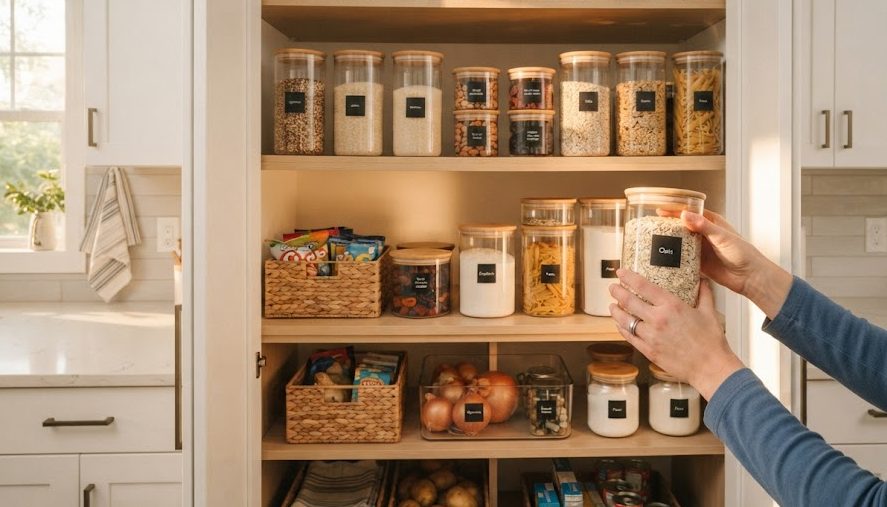
A well-organized pantry can make everyday cooking noticeably easier. When staples are visible, similar ingredients stay together, and frequently used foods are easy to reach, grocery shopping and meal preparation both become less frustrating.
You do not need a large walk-in pantry or a collection of expensive storage products to create a better system. In fact, the most useful pantry organization often comes from a few simple decisions: knowing what you own, giving ingredients sensible homes, and making those homes easy to maintain.
The goal is not to make your pantry look perfect every day. It is to make it easier to answer simple questions such as “Where is the rice?”, “Do we have another can of tomatoes?”, or “What should I use before buying more groceries?”
1. Empty the Pantry Before You Reorganize It
Trying to reorganize a crowded pantry one shelf at a time can leave hidden items exactly where they were. A better starting point is to temporarily remove the contents of the area you want to improve.
Place everything on a clean counter, table, or other suitable surface. This gives you a chance to see duplicates, forgotten ingredients, nearly empty packages, and items that have simply been placed in the wrong area.
First understand what you actually have. Then design the storage arrangement around the ingredients you regularly use.
2. Sort Food Into Broad Categories
Once everything is visible, create broad groups rather than dozens of tiny categories. Your system should be easy enough that everyone using the kitchen can understand it.
Rice, pasta, grains, flour and similar basics.
Vegetables, beans, tomatoes, soups and other tins.
Oats, cereal, spreads and other morning staples.
Oils, sauces, stocks, seasonings and frequently used ingredients.
The exact categories can be different in every household. What matters is creating a predictable location for each type of food.
3. Give Prime Space to the Foods You Use Most
Not every pantry item deserves equal accessibility. The easiest shelves to reach should be reserved for ingredients that regularly appear in your meals.
If you cook with pasta several times a week, keep pasta in a convenient location. If baking happens only occasionally, baking supplies can occupy a less accessible shelf. The same principle applies to specialty ingredients.
Everyday essentials
Weekly ingredients
Occasional items
4. Use Baskets to Control Small Packages
Small packets and loose food packages can quickly make a pantry look disorganized. Instead of allowing them to spread across an entire shelf, place related items inside a basket or shallow bin.
This works especially well for snack packets, seasoning envelopes, baking decorations, individual drink mixes, and other small products that are easy to overlook.
The important thing is not the appearance of the basket. It is the fact that several loose items now have one predictable home.
5. Create a “Use Soon” Area
One small section of your pantry can be reserved for ingredients that you want to remember to use. This might include opened packages, ingredients nearing the end of their useful storage period, or products you bought specifically for an upcoming meal.
Why this helps
Food that disappears behind newer groceries is easy to forget. A visible “use soon” section turns forgotten ingredients into a visual reminder and can help you plan meals around what you already own.
6. Make Labels Work for You
Labels can be useful, but they are not necessary everywhere. Use them when they solve a specific problem.
For example, if several storage containers look similar, a simple label can make identification faster. Labels can also help distinguish different types of flour, grains, baking ingredients, or other dry goods.
Keep labels short and easy to read. A pantry should not require a complicated filing system just to find a bag of rice.
7. Store Ingredients Where They Make Sense
Organization works best when storage location follows the cooking process. Ingredients used together can often be stored relatively close to one another.
For example, everyday cooking oils and frequently used seasonings can be placed near the main cooking area if appropriate. Breakfast staples can share a pantry section. Baking ingredients can have their own zone.
This reduces the number of places you need to visit while preparing a meal.
“When I need this ingredient, what other foods or tools am I usually using at the same time?”
8. Keep Similar Packages Together
Even a clean pantry becomes difficult to use when identical or related ingredients are scattered across several shelves. Try to keep duplicates together whenever practical.
If you find three containers of the same ingredient in different locations, bring them into one area. This gives you a more accurate picture of your inventory and makes shopping decisions easier.
It can also reveal which ingredients you tend to overbuy.
9. Use Vertical Space Wisely
Many pantry shelves contain unused vertical space because packages are shorter than the shelf itself. Simple shelf risers, stackable storage, or appropriately sized bins can help make better use of that height.
However, avoid stacking items so deeply that you cannot see or reach the products underneath. More capacity is not useful if it creates another hidden layer of clutter.
Uses available space while keeping ingredients visible and accessible.
Maximizes capacity but forces you to remove several items to reach one ingredient.
10. Rotate Older Ingredients Forward
When new groceries arrive, it is tempting to place them at the front because that is the easiest spot. Over time, this pushes older packages toward the back.
Instead, move older suitable items forward and place newer purchases behind them. This simple rotation habit makes ingredients easier to see and can help reduce unnecessary waste.
You do not need to reorganize the entire pantry every time you shop. A quick adjustment while putting groceries away is usually enough.
11. Keep an Inventory of Pantry Staples
A full inventory is not necessary for most households, but a short list of frequently purchased staples can be surprisingly useful.
Choose the ingredients you never want to run out of, such as rice, pasta, flour, cooking oil, canned tomatoes, beans, or other household essentials. When one reaches your preferred minimum amount, add it to your shopping list.
Simple pantry inventory
- Staple ingredient — current supply
- Staple ingredient — current supply
- Staple ingredient — current supply
- Ingredient to restock soon
- Ingredient already on the grocery list
12. Do a Five-Minute Pantry Reset
You do not need to spend an entire weekend maintaining your organization. A short reset once a week can prevent small problems from becoming a major mess.
- Return misplaced ingredients to their categories.
- Move older suitable items toward the front.
- Combine duplicates only when appropriate and safe to do so.
- Remove empty boxes and packaging.
- Check the “use soon” area and think about upcoming meals.
Doing a little regularly is much easier than waiting until every shelf becomes difficult to navigate.
Common Pantry Organization Mistakes
A few habits can make even a well-designed pantry difficult to maintain.
- ✦ Buying duplicates because existing supplies are hidden.
- ✦ Putting every ingredient into storage containers even when original packaging works well.
- ✦ Creating too many categories that nobody remembers.
- ✦ Stacking products so deeply that the back of the shelf becomes invisible.
- ✦ Designing the pantry for appearance instead of everyday convenience.
Build the System Around Your Real Routine
There is no universal pantry arrangement that works for every home. A household that cooks mostly from scratch may need a different setup from one that relies on quick meals. A family with young children may want certain foods within easy reach, while another household may prioritize baking supplies, snacks, or breakfast foods.
The most successful system is the one that matches your actual habits. If something repeatedly ends up in the wrong place, that may be a sign that its assigned location is inconvenient rather than a sign that you are failing to stay organized.
A Better Pantry Should Make Life Easier
Organizing a pantry is ultimately about reducing friction. When everyday ingredients have predictable homes, frequently used foods are easy to reach, older products stay visible, and small packages are contained, ordinary kitchen tasks become simpler.
Start with broad categories, prioritize the ingredients you use most, create a visible area for foods that need attention, and maintain the arrangement with short regular resets. You do not need a flawless pantry. You need a practical one that helps you find what you need when you need it.