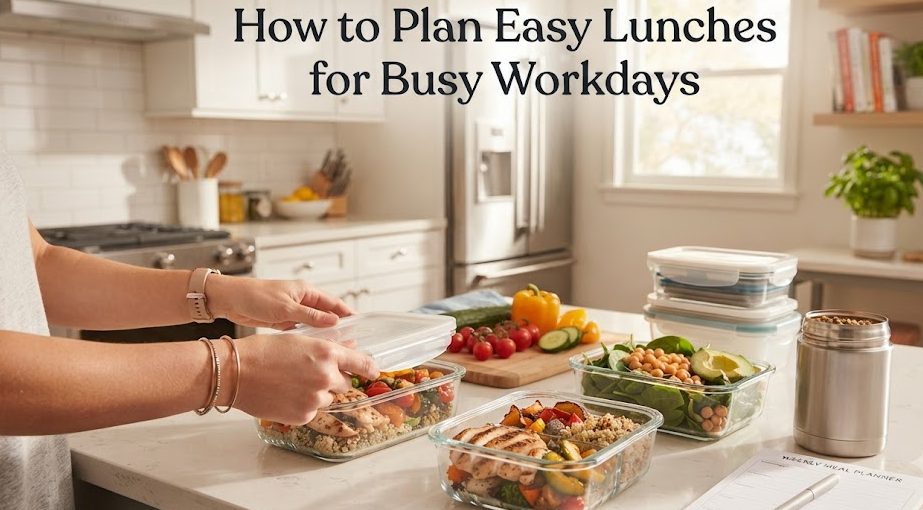
Make Lunch Easier Before the Workday Begins
A good workday lunch does not need to be elaborate. The most practical lunches are simple to prepare, easy to pack, satisfying enough to carry you through the afternoon, and flexible enough to fit around an unpredictable schedule.
For busy professionals, lunch can easily become an afterthought. Meetings run late, errands appear unexpectedly, or there is simply not enough energy left to prepare something complicated in the middle of the day. Planning a few dependable lunch options ahead of time can remove much of that daily decision-making.
The trick is to build a small system rather than searching for a completely different recipe every day. With a handful of ingredients, a few repeatable combinations, and some light preparation, weekday lunches can become much easier to manage.
Choose Convenience Before Variety
It is tempting to plan five completely different lunches for five workdays. In reality, that can create unnecessary shopping, preparation, and cleanup.
Instead, choose a few lunch formats that you genuinely enjoy. You can change the ingredients while keeping the basic structure the same.
Grain or starch + vegetables + protein + dressing or sauce.
Flatbread + filling + vegetables + a flavorful spread.
Several small portions arranged together for an easy meal.
Build Lunch Around a Simple Formula
A formula is useful because it gives you a starting point without forcing you to follow a specific recipe. A balanced lunch can be built from a few broad components.
This approach makes it possible to create several lunches from the same basic groceries. You are changing combinations rather than starting from zero each morning.
Plan Two or Three Main Lunches
Instead of assigning a unique meal to every day, choose two or three reliable options for the week. You can alternate them according to your schedule.
For example, one lunch might be a grain bowl, another could be a wrap, and a third might be a simple leftover-based meal. This gives you enough variety without requiring a long ingredient list.
Choose lunches that share at least a few ingredients. One batch of cooked grains or prepared vegetables can often support several different meals.
Match Lunches to Your Schedule
Not every workday gives you the same amount of time. A lunch that works on a quiet Tuesday may be inconvenient on a day filled with meetings.
Look at your calendar before deciding what to prepare. On especially busy days, choose something that can be eaten quickly with minimal assembly. When you have more time, a meal that requires reheating or a little preparation may be perfectly practical.
| Workday | Useful lunch approach |
|---|---|
| Meeting-heavy | Ready-to-eat meal requiring little or no assembly |
| Normal day | Prepared bowl, wrap, salad or leftovers |
| Flexible day | A meal assembled from available ingredients |
Prepare Components Instead of Complete Meals
Preparing individual ingredients can be more flexible than making five finished lunches at once. Cook a useful base, prepare some vegetables, and have a few convenient additions available.
During the week, combine those components in different ways. One day they might become a bowl; another day they could go into a wrap or accompany a simple side.
This approach also makes it easier to adjust your lunch when your plans change.
Keep a Few Emergency Lunch Ingredients
Even the best plan will occasionally fall apart. A meeting may take longer than expected, food preparation may not happen, or you may simply forget to pack lunch.
Having a few shelf-stable or freezer-friendly ingredients available can provide a backup. Choose foods that suit your normal eating habits and can be combined quickly into something satisfying.
A convenient grain, bread or similar staple.
A protein or other satisfying ingredient.
A sauce, seasoning, spread or dressing.
Make Leftovers Part of the Plan
Leftovers can be one of the easiest workday lunch solutions because the cooking has already been done. When preparing dinner, think about whether an extra portion could become tomorrow’s lunch.
You can also intentionally cook a little more of a useful ingredient without making an entire second meal. A batch of roasted vegetables, cooked grains, or another suitable component can make the next day’s lunch much easier.
The key is to store leftovers appropriately and keep them visible enough that you remember to use them.
Keep Lunch Preparation Short
A weekday lunch system should not depend on an elaborate Sunday routine. If preparation takes too long, it becomes difficult to maintain during busy weeks.
Look for small tasks that remove work from the morning. Wash produce, portion suitable ingredients, prepare a dressing, or organize lunch containers when you already have a few spare minutes.
A 10-minute evening routine
- Check tomorrow’s schedule.
- Choose one planned lunch.
- Move the required ingredients into an easy-to-reach area.
- Pack anything that is already ready.
- Leave only the simplest morning task for tomorrow.
Use a Short Ingredient List
Every additional ingredient creates another shopping decision and another item that may need preparation. For busy weekdays, meals with a manageable ingredient list are often easier to repeat.
This does not mean lunches need to be boring. Flavor can come from a few well-chosen ingredients, sauces, herbs, spices, or toppings rather than a dozen separate components.
Choose versatile groceries that can appear in more than one meal throughout the week.
Pack for the Way You Will Actually Eat
The best lunch container is one that fits your routine. If your workplace has a refrigerator and microwave, you may have more flexibility. If you need to eat away from a kitchen, meals that can be enjoyed without reheating may be more convenient.
Think about portability, leakage, portioning, and how much assembly the meal requires. If a lunch creates a pile of separate containers or needs several steps before eating, you may be less likely to choose it on a hectic day.
Create a Flexible Five-Day Framework
This is only a framework, not a rigid schedule. Swap days whenever your calendar changes.
Give Yourself Permission to Repeat Meals
There is nothing wrong with eating the same lunch more than once in a week. Repetition can actually make meal planning easier because you already know the ingredients, preparation time, and portion that works for you.
Once a lunch becomes dependable, it can become part of your regular rotation. You can then spend your planning energy experimenting with one new option instead of reinventing every meal.
Plan Around Your Energy, Not Just Your Time
A lunch may take only fifteen minutes to prepare but still feel like too much work after a demanding day. Consider your energy level when deciding how much preparation to schedule.
Keep the easiest meals available for the busiest days. Save more involved preparation for times when you actually have the energy to do it. A realistic plan will survive a busy week much better than an ambitious one.
A Simple Weekly Lunch Checklist
- □ Check the week’s work schedule.
- □ Choose two or three dependable lunch formats.
- □ Look through ingredients already available.
- □ Identify one or two items that can be prepared ahead.
- □ Plan a backup lunch for an especially busy day.
- □ Add missing ingredients to the grocery list.
Make Lunch Predictable, Not Complicated
The easiest workday lunches are usually built around a small number of reliable choices. Plan according to your schedule, use flexible ingredient combinations, prepare components instead of complicated complete meals, and keep a few backup options available.
Most importantly, do not make weekday lunch another demanding task. A simple system that you can repeat consistently will save more time and stress than an elaborate meal plan that only works during a perfectly organized week.