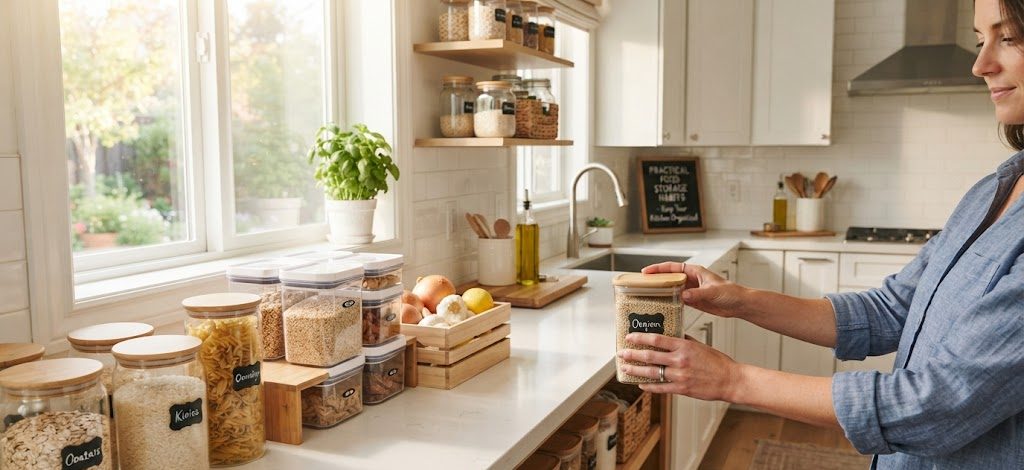
Good food storage is about more than keeping leftovers fresh. When ingredients have designated places and containers are easy to identify, the refrigerator, freezer, and pantry become easier to use. A few practical storage habits can reduce clutter, prevent forgotten food, simplify meal preparation, and make everyday kitchen routines feel much calmer.
A disorganized kitchen often develops gradually. A half-used package gets pushed behind newer groceries, leftovers disappear beneath containers, pantry items become difficult to see, and eventually it becomes hard to remember what is available.
The solution does not require expensive storage products or a perfectly arranged kitchen. The most useful changes usually involve simple habits: grouping similar foods, labeling leftovers, using suitable containers, rotating older items forward, and storing food where it makes sense for how often you use it.
Give Every Food Category a Home
One of the easiest ways to reduce kitchen clutter is to decide where different types of food belong. When everything has a predictable location, putting groceries away becomes faster and finding ingredients requires less searching.
Keep grains, canned foods, pasta, and other shelf-stable items grouped together.
Group frequently used chilled ingredients so they are easy to locate.
Keep similar frozen foods together and make older items easy to spot.
Use the “First In, First Out” Habit
When new groceries arrive, it is tempting to place them wherever there is room. A better approach is to move older items toward the front and place newer products behind them when practical.
This simple rotation method makes older food more visible and encourages you to use it first. It works particularly well for pantry shelves, refrigerators, and freezers where products can easily become hidden.
When unpacking groceries, take a few extra seconds to check whether older items should be moved forward. That small action can save you from discovering forgotten food weeks later.
Choose Containers Based on the Food
Storage containers do not all need to be identical. What matters more is choosing containers that fit the food, storage area, and way you normally use leftovers.
Clear containers can make contents easier to identify without opening them. Stackable shapes can make better use of refrigerator space, while smaller containers are useful for sauces, toppings, and individual portions.
For food safety, use containers and storage methods appropriate for the particular food, and follow the manufacturer’s instructions when using containers in appliances such as microwaves or freezers.
Cool and Store Leftovers Promptly
Leftovers are valuable because they can turn tomorrow’s lunch or dinner into an almost effortless meal. However, they need to be handled and stored properly.
Rather than leaving cooked food sitting out for an extended period, divide larger amounts into suitable shallow containers when appropriate so they can cool more efficiently. Refrigerate or freeze food according to recommended food-safety practices, and keep your refrigerator at a safe temperature.
When in doubt about whether a food has been stored safely, it is better to follow established food-safety guidance than rely on smell or appearance alone.
Label Leftovers Before They Disappear
A container without a label can quickly become a mystery. You may remember what you cooked today, but a few days later it can be surprisingly difficult to identify exactly what is inside or when it was prepared.
Keep labels simple
Food: __________________________
Date prepared: __________________
Use by / freeze: ________________
You do not need elaborate labels. A small piece of removable tape or a freezer-safe label can be enough to make stored food easier to manage.
Keep Frequently Used Foods Within Easy Reach
Organization should reflect your habits. Ingredients used every day should not require moving five containers to reach them.
Keep everyday staples in convenient locations and reserve less frequently used ingredients for higher shelves, deeper cabinets, or other spaces that are slightly harder to access.
This creates a kitchen that works with your routine instead of forcing you to reorganize the same area every time you cook.
Create a “Use Soon” Zone
One small area in the refrigerator can become a powerful organizational tool. Use it for foods that need attention soon, such as opened packages, leftovers, or produce approaching the end of its best quality.
The purpose is visibility. Instead of allowing these foods to disappear among newer groceries, place them somewhere you will naturally see them.
Keep foods that need attention visible.
Include those foods in upcoming meals.
Move them into meals before buying replacements.
Do Not Overfill the Refrigerator
A full refrigerator can feel efficient because it means you have plenty of food available. But excessive crowding makes organization harder and can prevent you from seeing what is already there.
Leave enough room to identify containers and move items without having to rearrange the entire shelf. A little empty space is useful because it gives you flexibility when groceries and leftovers change throughout the week.
The same principle applies to pantry shelves and freezer drawers. If everything is packed tightly together, even a well-stocked kitchen can become difficult to use.
Group Foods by How You Use Them
Traditional categories are helpful, but usage-based organization can be even more practical. Think about what you reach for together.
| Kitchen group | Examples |
|---|---|
| Breakfast | Oats, cereal, spreads, eggs, breakfast staples |
| Quick meals | Pasta, canned foods, sauces, frozen vegetables |
| Snacks | Fruit, nuts, crackers, yogurt, other preferred snacks |
| Baking | Flour, sugar, baking ingredients, extracts, and related supplies |
This kind of arrangement can be particularly useful when several people share the kitchen because it makes common ingredients easier to locate.
Keep Pantry Packages Upright and Visible
Open bags and half-used packages can quickly turn pantry shelves into a collection of difficult-to-manage piles. Where practical, transfer frequently used dry goods into suitable containers or use simple bins to keep smaller packages grouped together.
Clear containers can help with visibility, but you do not need to transfer every food into a matching container. Use additional storage only where it solves an actual problem.
For foods that require labels, include useful information such as the product name and relevant date details so there is no confusion about what you are storing.
Make the Freezer Easier to Search
Freezers are especially prone to becoming storage black holes. Small packages slide behind larger ones, frozen leftovers lose their labels, and older foods become difficult to identify.
Group freezer contents into broad categories such as prepared meals, vegetables, proteins, breakfast foods, and baking ingredients. Use containers or baskets where they genuinely improve access.
Most importantly, avoid stacking so deeply that you cannot tell what is underneath. Visibility is one of the best forms of freezer organization.
Schedule a Ten-Minute Kitchen Reset
Organization is easier to maintain when you occasionally reset the storage areas before clutter becomes overwhelming. You do not need to spend an entire afternoon cleaning the refrigerator.
The 10-minute reset
- Remove obvious empty packages and expired or spoiled food.
- Move older items toward the front.
- Group similar foods together.
- Wipe any visible spills or crumbs.
- Identify ingredients that should be used soon.
- Return everything to its designated area.
Doing a short reset regularly is usually easier than waiting until the storage areas become so crowded that the task feels enormous.
Connect Storage With Your Meal Plan
Organization becomes even more useful when it supports cooking. At the beginning of the week, look through stored foods and identify ingredients that can become part of planned meals.
If you notice cooked vegetables, opened sauces, leftover grains, or other suitable foods that need to be used, build them into your upcoming meals before purchasing replacements.
This creates a useful cycle: shop thoughtfully → store clearly → see what you have → use it → shop again.
Avoid the Most Common Storage Problems
- Do not store food in unsuitable containers or conditions.
- Do not rely only on memory to track leftovers.
- Do not hide older food behind newly purchased groceries.
- Do not overfill shelves simply because there is technically room.
- Do not keep food indefinitely when you are unsure whether it remains safe.
- Do not buy additional ingredients before checking what needs to be used.
When it comes to food safety, follow reliable food-safety guidance for storage temperatures, refrigeration, freezing, and recommended storage times rather than relying on appearance or smell alone.
A Simple Storage System to Maintain
Organize for the Way You Actually Eat
Good food storage is not about making your refrigerator look perfect. It is about creating a system that makes food visible, accessible, and easier to use. Group similar ingredients, rotate older items forward, label leftovers, choose suitable containers, and maintain a small area for foods that need attention soon.
Once these habits become routine, your kitchen can become easier to navigate without requiring constant reorganizing. You will spend less time searching for ingredients, have a clearer picture of what you already own, and make everyday meal preparation feel more manageable.