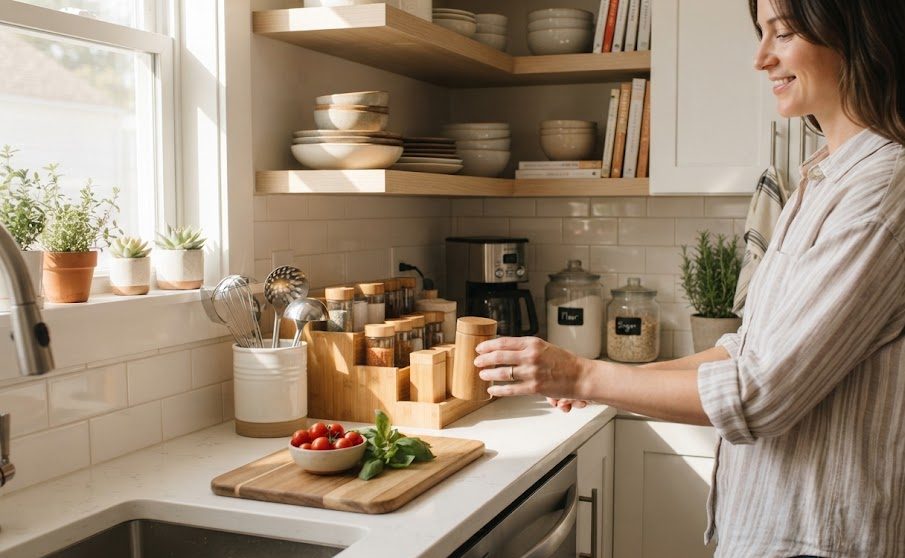
Make Every Inch Work Without Filling Every Inch
A small kitchen does not necessarily need more storage. In many cases, it needs fewer unnecessary items, better visibility, and a storage system that makes frequently used things easy to reach.
Organizing a small kitchen can feel like a puzzle. There may be limited cabinet space, narrow counters, crowded drawers, and very little room for appliances that are used only occasionally. Adding more containers and organizers can sometimes make the problem worse.
The goal is not to squeeze more belongings into every available corner. A better approach is to make thoughtful decisions about what deserves space, where it should live, and how easily you can access it.
Start by Removing the Obvious Clutter
Before buying storage products, take a look at what is already in the kitchen. Small spaces become difficult to manage when rarely used items compete with everyday essentials.
Begin with one drawer, shelf, or section of counter. Remove everything and separate items into simple groups: things you use regularly, things you use occasionally, duplicates, and things that no longer serve a useful purpose.
Ask three questions
- Do I use this often enough to justify its space?
- Is this the best place for it?
- Do I already own another item that does the same job?
You do not have to become extremely minimalist. The purpose is simply to make room for the things that genuinely support your everyday cooking.
Give Your Most-Used Items the Best Locations
In a compact kitchen, storage space should be assigned according to frequency of use. The tools and ingredients you reach for every day should be easier to access than items used once every few months.
Keep within easy reach.
Store nearby but not necessarily on the counter.
Use higher or less convenient storage areas.
Protect Your Counter Space
Counter space is especially valuable in a small kitchen because it is where most preparation happens. If the counter becomes permanent storage, the room can feel crowded even when the cabinets are reasonably organized.
Keep only the appliances and tools you use frequently on the work surface. If an appliance is used occasionally, consider whether it can live inside a cabinet or another suitable storage area.
Every permanent item on the counter should earn its place through frequent use or genuine convenience.
Create Storage Zones Instead of Random Piles
Small kitchens benefit from simple categories. When similar items are stored together, you can find what you need without opening every cabinet.
For example, keep cooking utensils together, food-storage supplies together, baking ingredients together, and everyday pantry staples in another area. The exact categories should reflect how you use your kitchen.
Cooking Zone
Pans, spatulas, cooking spoons, and frequently used seasonings.
Preparation Zone
Cutting boards, knives, mixing bowls, and measuring tools.
Food Zone
Pantry staples and ingredients grouped by practical use.
Storage Zone
Containers, wraps, reusable bags, and other food-storage supplies.
Use Vertical Space Carefully
When floor and counter space are limited, look upward. The vertical area inside cabinets can sometimes provide useful storage opportunities.
Shelf risers, vertical dividers, stackable containers, or suitable wall-mounted solutions can help organize items without expanding the footprint of the kitchen.
However, avoid adding a storage product simply because there is an empty surface. Every organizer should solve a specific problem.
Choose Multi-Purpose Items When Possible
In a small kitchen, equipment that can perform several useful functions may be more practical than owning a separate tool for every task.
This does not mean every kitchen needs to use the same equipment. If you genuinely enjoy using specialized tools, keep the ones that earn their space. The idea is to be selective rather than automatically collecting single-purpose gadgets.
The space-saving question
Before buying a new kitchen gadget, ask whether an item you already own can perform the same task adequately. This can prevent storage problems before they begin.
Make Pantry Storage Easy to See
Small kitchens often have narrow or deep cabinets where food disappears behind other packages. Visibility becomes more important than simply maximizing capacity.
Group similar foods and avoid creating unnecessarily deep stacks. If appropriate for your household, clear or easily identifiable containers can help you recognize staples quickly, but you do not need to transfer everything into matching containers.
Keeping original packaging is perfectly practical when it helps you identify products, check information, and replenish supplies easily.
Create a “Use First” Area
Limited storage can become especially frustrating when older ingredients are hidden behind newer purchases. A small “use first” area can help keep suitable foods visible and encourage better meal planning.
Choose one visible refrigerator shelf, basket, or pantry section for foods that should receive attention soon. Check it before shopping or deciding what to cook.
Organize Cabinets by Access, Not Appearance
Perfectly matching rows of containers may look attractive, but a small kitchen needs an arrangement that works in everyday life.
Store heavier items where they can be handled safely and comfortably. Keep frequently used dishes accessible, while rarely used serving pieces and specialty equipment can occupy less convenient areas.
If you have to remove six items to reach one pan, the storage system may technically be full but practically inefficient.
Control the Number of Opened Packages
Multiple opened packages of the same ingredient can make a small pantry appear more crowded than it actually is. When practical, use what is already open before starting another package of the same type.
This habit also makes it easier to understand what you really have. Instead of seeing three partly used packages, you may eventually have one active package and a clearer storage area.
Keep Food-Storage Supplies Under Control
Containers, lids, wraps, and reusable bags can easily take over a small kitchen. The problem is often not the number of containers alone but the lack of a consistent system.
Use the Refrigerator Door for Visibility, Not Overflow
The refrigerator door can become an easy place to drop random items. Instead, give its compartments a simple purpose based on the foods suitable for that storage area.
Keeping similar items together means you can quickly identify what is available. It also prevents small bottles, jars, and packages from becoming an unmanageable collection.
For food safety, follow the storage recommendations appropriate for the specific foods you are keeping rather than organizing solely around convenience.
Think Twice Before Adding More Storage Products
When a cabinet feels crowded, the natural reaction is often to buy another rack, basket, or organizer. Sometimes that helps. Sometimes it simply allows more clutter to accumulate.
First determine what is creating the problem. If the issue is too many items, an organizer cannot solve it. If the problem is poor visibility or unused vertical space, then a carefully selected organizer may be worthwhile.
- Identify the exact storage problem.
- Measure the available space.
- Decide what the organizer will hold.
- Make sure it improves access rather than reducing it.
Keep a Small “No Permanent Home” Basket
If your kitchen becomes cluttered with miscellaneous objects, one temporary basket can help. Use it for items that belong elsewhere rather than allowing them to remain scattered across counters.
Empty the basket regularly. It should be a transition point, not another permanent storage category.
Create a Ten-Minute Weekly Reset
A small kitchen can become cluttered quickly because there is less room for disorder to hide. A short weekly reset can keep the system manageable.
Clear unnecessary counter items.
Return misplaced tools to their zones.
Check the pantry and “use first” area.
Remove packaging or items that no longer belong there.
Let Your Kitchen Reflect Your Cooking Style
The best organization system is personal. Someone who prepares quick weekday meals will need different storage priorities from someone who bakes regularly or cooks large family dinners.
Pay attention to your own routines. If you constantly leave one appliance on the counter because putting it away is inconvenient, reconsider its storage location. If you repeatedly search for the same ingredient, move it somewhere more visible.
Repeated behavior is useful information. Your kitchen is telling you where the current system is not working.
Avoid Filling Every Empty Space
One of the biggest mistakes in a small kitchen is treating every empty shelf or drawer as an invitation to store something. Some empty space is useful.
Leaving room around frequently used items makes them easier to remove and return. It also gives you flexibility when groceries, dishes, or meal-preparation equipment temporarily increase the amount of stuff in the kitchen.
Less Clutter Starts With Better Decisions
A small kitchen does not need to hold everything. Give priority to the tools, ingredients, and equipment that support the way you actually cook. Keep frequently used items accessible, group similar things together, use vertical space carefully, and protect your valuable counter area.
Most importantly, resist the temptation to solve every storage problem by adding another organizer. Sometimes the most effective organization improvement is simply removing what you no longer need. When every item has a sensible place and enough room to access it, even a compact kitchen can feel comfortable, efficient, and easy to use.